Choose Sleep Cycle if you wake up easily but feel groggy, and you want detailed sleep tracking with a smart alarm that rings in your lightest sleep phase. Choose Weky if your real problem is getting out of bed: its alarm only stops after a wake-up mission, it checks you're still up a few minutes later, and it has no snooze. They solve different halves of the morning, and some people use both — Sleep Cycle to track the night, Weky to make sure the day starts.
Here's the honest framing. A smart alarm makes the moment of waking gentler. It does nothing about the next ten minutes, which is where heavy sleepers and snoozers actually lose. A mission alarm doesn't care how gentle the moment is. It cares whether you end up standing.
Key takeaways
- Sleep Cycle is a sleep tracker and smart alarm clock. It estimates your sleep stage from sound or motion and wakes you in light sleep within a window.
- Weky is a mission alarm. It rings at your exact time and won't stop until you finish a task you can't do half-asleep.
- Phone sleep tracking is an estimate. It's good at sleep vs wake, weaker at exact sleep stages.
- Snooze is the dividing line. Sleep Cycle lets you snooze; Weky has no snooze at all.
- You can use both: Weky reads your sleep from Apple Health and shows each night beside the morning that followed.
How the Sleep Cycle app works: smart alarm clock and sleep tracking
Sleep Cycle analyzes your sleep in one of two ways: it listens with your phone's microphone for movement and sounds at night, or it uses your phone's accelerometer on the mattress. Like most apps like Sleep Cycle, it doesn't need a wearable such as a Fitbit. From that sleep detection it estimates different sleep stages — deep sleep, light sleep or REM — and builds a nightly graph, a sleep score and long-term sleep data based on your sleep over weeks. It also detects snoring and sleep talking, lets you add sleep notes (caffeine, stress, exercise) to see what affects your sleep quality, and offers sleep sounds, sleep stories and breathing exercises to help you fall asleep. You can set a sleep goal, and the advanced sleep features sit in its premium tier.
The headline feature is the smart alarm. Instead of a traditional alarm, you set a 30-minute window — say 6:30 to 7:00 — and Sleep Cycle rings at the moment in that window when it thinks you're in your lightest sleep phase. The idea is that waking from lighter sleep stages helps you wake up feeling refreshed rather than being pulled out of deep sleep.
Is the idea behind smart wake sound?
Partly. Research on sleep inertia — the grogginess after waking — does show it's worse when you wake from slow-wave (deep) sleep. So avoiding deep sleep at wake time is a reasonable goal. The weak link is detection: a phone on a mattress can't see your brain waves the way an EEG device in a sleep lab can.
Is the Sleep Cycle app accurate at tracking sleep stages?
As accurate as a phone can be — which is useful, but not clinical. In a 2015 study comparing a similar iPhone sleep app to an overnight lab sleep study (polysomnography), the app was good at telling sleep from wake but its sleep stage estimates correlated poorly with the lab. A 2021 study of seven consumer sleep trackers found the same pattern: decent at sleep vs wake, much less reliable for stages.
That doesn't make the data useless. Trends over weeks — your sleep schedule, how much later you sleep at weekends, which sleep habits affect your sleep quality, which nights you snore — are genuinely informative, and that's the personal sleep picture Sleep Cycle gives you best. Just don't treat a single night's sleep score as a verdict. Sleep researchers even have a name for people who start sleeping worse because they're anxious about their numbers: orthosomnia.
How Weky works: an alarm app for getting up
Weky starts from the opposite assumption: waking will be hard, so the alarm has to win anyway. When it rings, it only stops after a wake-up mission — math, typing, push-ups, squats, a photo of the sky, a photo of your made bed, an object hunt, a barcode scan, shaking the phone or saying an affirmation out loud. You can stack several missions on one alarm.
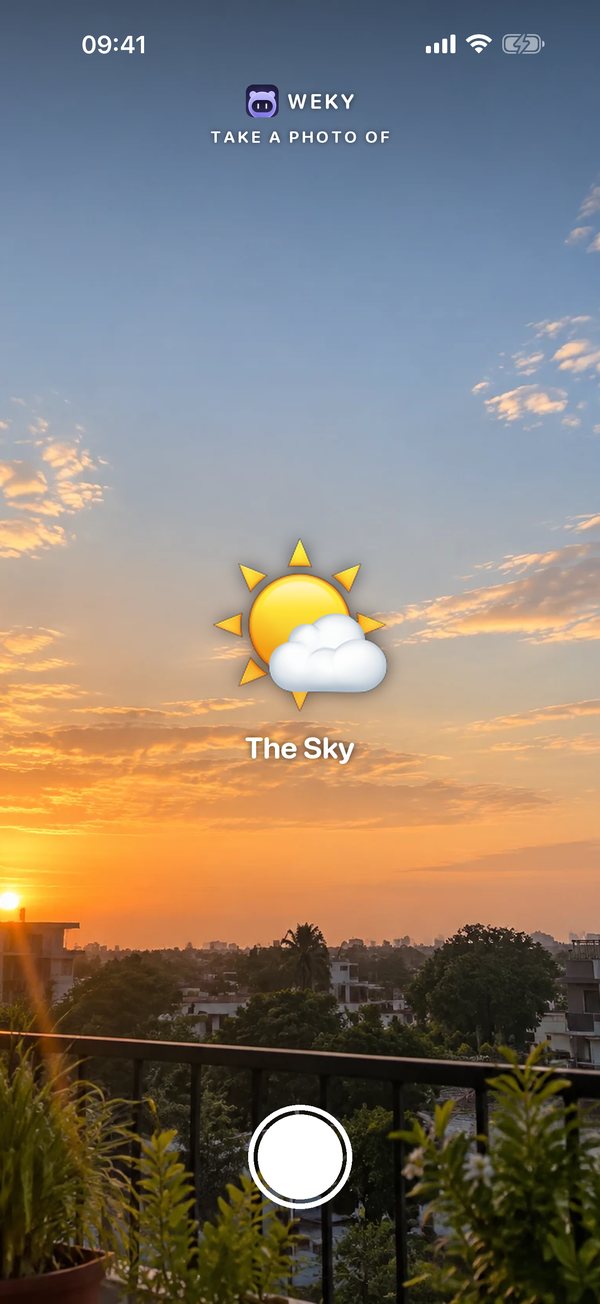
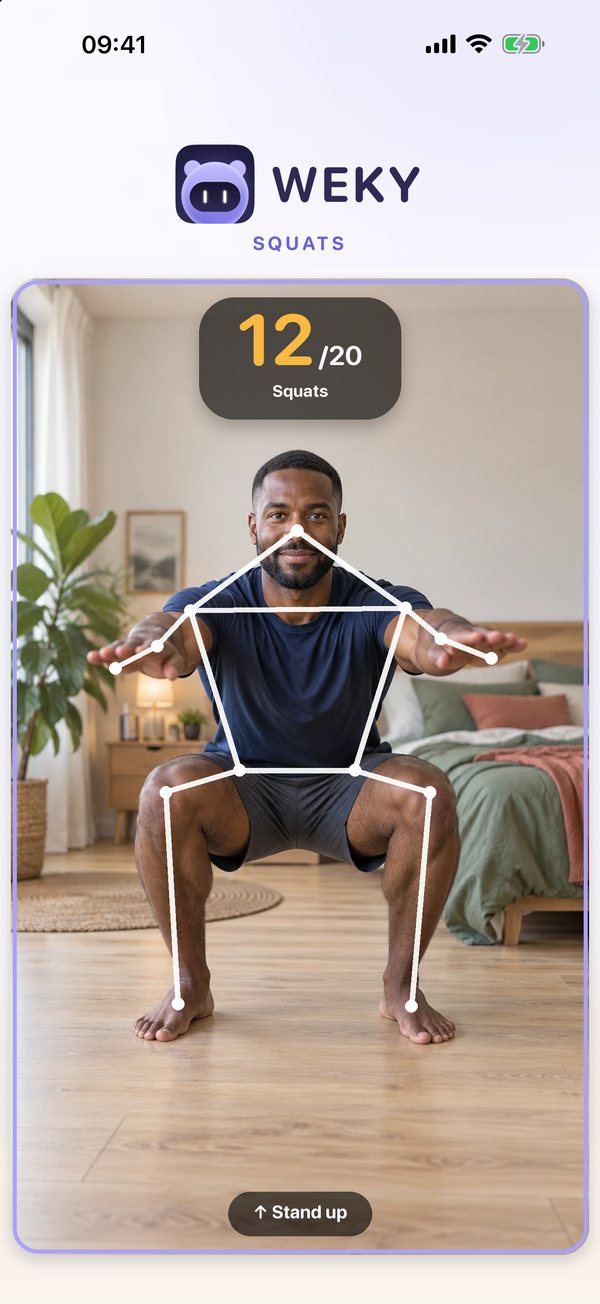
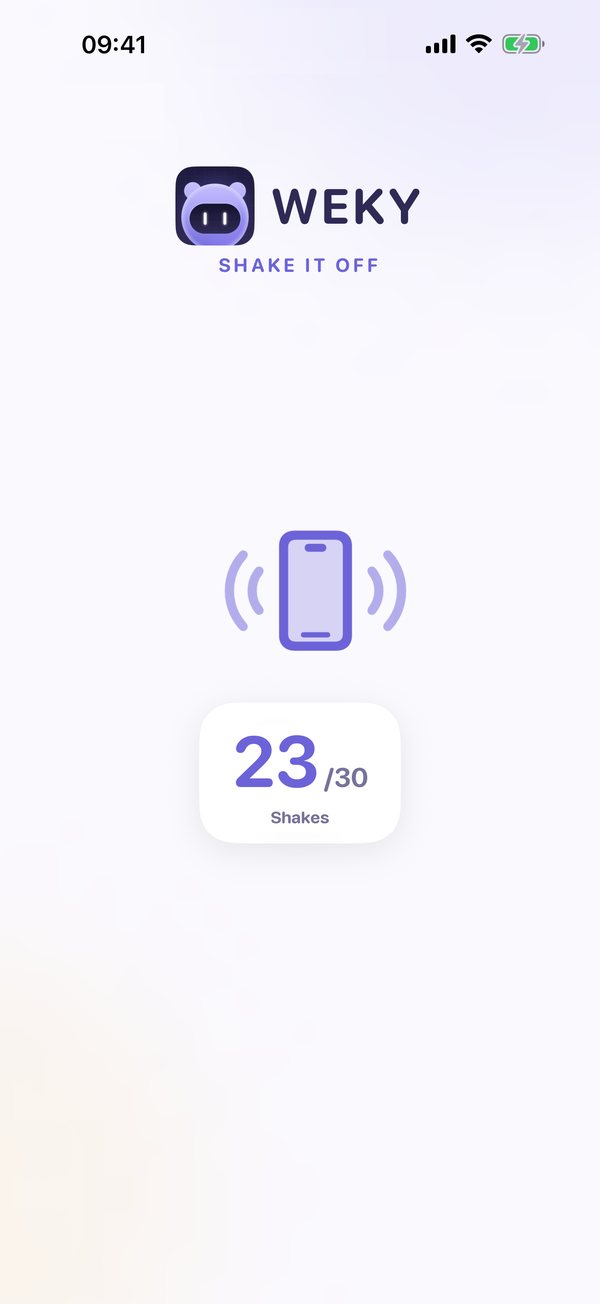
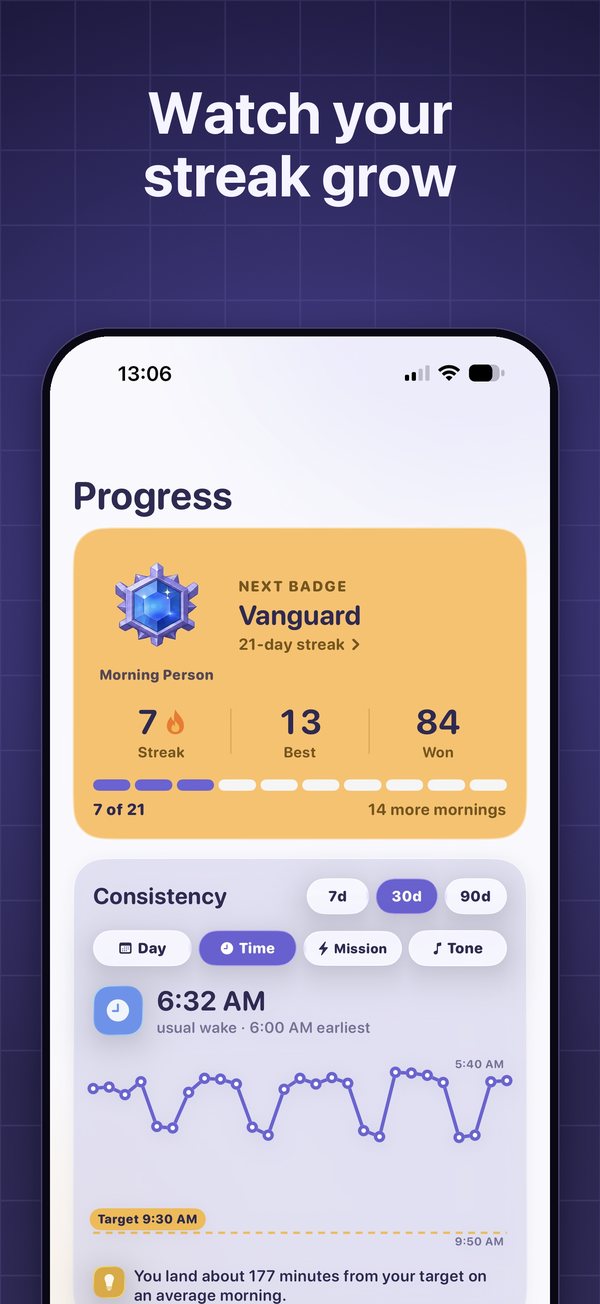
A few minutes after you finish, the wake-up check rings once more, so a heavy sleeper who crawls back under the duvet is caught. There's no snooze button. And because many bad mornings start the night before, Weky can block the apps you scroll in bed from a start time you choose until your morning mission is done.
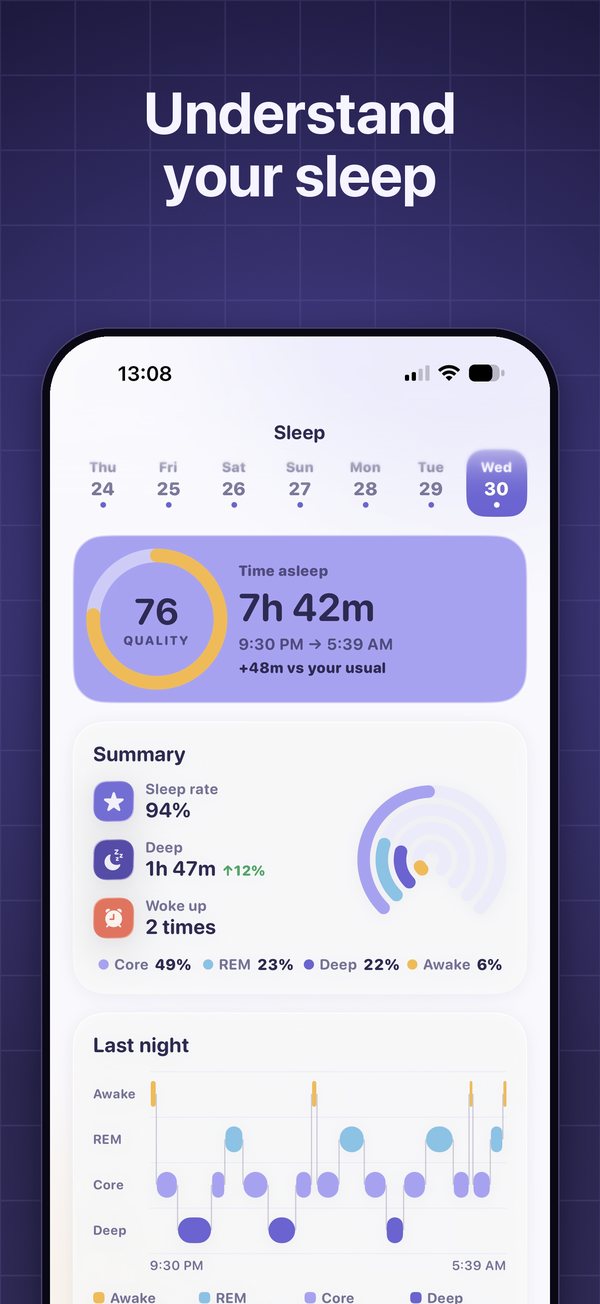
For sleep tracking, Weky doesn't run its own microphone or accelerometer analysis. It reads your nights from Apple Health — from an Apple Watch, for example — and shows each night's time asleep and stages beside the morning that followed: when you got up, how long the mission took, whether you won.
Weky vs Sleep Cycle: sleep tracking, snooze and alarm sound compared
| Feature | Weky | Sleep Cycle |
|---|---|---|
| Main job | Get you out of bed on time | Track sleep, wake you gently |
| Smart alarm (wake-up window) | – rings at your set wake time | ✓ |
| Wake-up missions | ✓ 10, stackable | – |
| Snooze | None | Yes |
| Wake-up check | ✓ | – |
| Sleep tracking | From Apple Health | Built in: microphone or accelerometer |
| Snore detection | – | ✓ |
| Sleep sounds and stories | – | ✓ |
| App blocking at night | ✓ | – |
| Habit tracker & streaks | ✓ | – |
| Alarm sound choice | Gentle to loud tones | Gentle, rising alarm sounds |
| Platforms | iPhone, iPad | iPhone, iPad, Android |
| Price | Weky Pro: $2.99/mo, $19.99/yr (7-day trial), $39.99 lifetime | Free basics; premium tiers on the App Store |
Smart alarm vs mission alarm: which wakes you better at your wake time?
It depends on what goes wrong in your mornings.
- You wake up, but don't wake up rested and feel terrible for an hour. That's sleep inertia. A smart alarm can help by avoiding deep sleep, and so can more total sleep, a regular wake time and morning light. Sleep Cycle fits.
- You turn the alarm off and wake up 90 minutes later. That's the snooze-and-drift problem. Timing the alarm better won't help, because the issue isn't the moment you wake but the decision you make next. Weky fits.
- You don't hear it at all. Read why you sleep through your alarm first — then a mission alarm with a wake-up check.
On snoozing itself, the research is more nuanced than "snoozing is bad". One lab study found that 30 minutes of snoozing didn't harm cognition or sleep architecture for habitual snoozers. But snoozers in a larger study showed lighter, more disturbed sleep before waking. The problem most people have isn't nine minutes — it's the snooze that turns into an hour. That's why Weky simply doesn't have one. More in how to stop hitting snooze.
The verdict
Sleep Cycle is the better sleep tracker and the gentler alarm, for people who get up once they're awake. Weky is the better alarm clock for heavy sleepers and snoozers, with missions, a wake-up check, app blocking and habits. If you want both, use Sleep Cycle to track and Weky to wake.
And it rings every time. Weky schedules a real system alarm, so it rings on the lock screen in Silent mode, Sleep, Work or any Focus — even after a force-quit or a restart — without running in the background or draining your battery.
How to use Weky and Sleep Cycle together
- Let Sleep Cycle (or your Apple Watch) track the night, and turn on Apple Health sync.
- Turn off Sleep Cycle's alarm, or set it as a gentle pre-alarm a few minutes earlier.
- Set your real wake time in Weky with one or two missions — ideally one that gets you out of the bedroom, like the barcode scan.
- Open Weky's Sleep tab to see each night next to how the morning went.
Whichever you choose — download Sleep Cycle, set an alarm in Weky, or both — the biggest lever to improve your sleep and sleep better is still the boring one: the same sleep and wake time every day, even though nobody can reliably wake without an alarm on day one. Our guide on how to sleep better at night explains why. And if you're weighing more apps than these two, see Alarmy alternatives and the best alarm apps for iPhone.
Frequently asked questions
Is Sleep Cycle worth it?
Sleep Cycle is worth it if you want to understand your sleep patterns and wake gently, and you reliably get up once you're awake. It is less useful for heavy sleepers, because its alarm can be snoozed and there's nothing that makes you leave the bed.
Is the Sleep Cycle app accurate?
Phone-based trackers are reasonable at telling sleep from wake but much weaker at identifying exact sleep stages compared with a lab sleep study (polysomnography). Treat the stage graph as an estimate and look at trends over weeks rather than any single night.
What is the best sleep cycle alarm?
Sleep Cycle is the best-known smart alarm on iPhone. RISE and some wearables offer similar smart-wake windows. If your problem is falling back asleep rather than waking groggy, a mission alarm such as Weky is the better tool.
Do alarms spike cortisol?
Cortisol rises naturally in the first 30–45 minutes after waking — the cortisol awakening response. A 2023 lab study found no clear effect of snoozing for 30 minutes on that response compared with getting up at once. There's no good evidence that an ordinary alarm is harmful.
Can I use Weky and Sleep Cycle together?
Yes. Many people let Sleep Cycle track the night and use Weky as the alarm that gets them out of bed. Weky reads sleep from Apple Health, so data synced there can appear next to your mornings in Weky.
How do smart alarms detect your sleep?
Smart alarms estimate how deeply you're sleeping from movement (the phone's accelerometer or a watch) or sound (the microphone), then ring at the moment within your wake-up window when you seem to be in lighter sleep.
References
- Sleep Cycle, US App Store listing, checked October 2026.
- Bhat S, Ferraris A, Gupta D, et al. Is there a clinical role for smartphone sleep apps? Comparison of sleep cycle detection by a smartphone application to polysomnography. Journal of Clinical Sleep Medicine, 2015;11(7):709–715.
- Chinoy ED, Cuellar JA, Huwa KE, et al. Performance of seven consumer sleep-tracking devices compared with polysomnography. Sleep, 2021;44(5):zsaa291.
- Baron KG, Abbott S, Jao N, et al. Orthosomnia: are some patients taking the quantified self too far? Journal of Clinical Sleep Medicine, 2017;13(2):351–354.
- Hilditch CJ, McHill AW. Sleep inertia: current insights. Nature and Science of Sleep, 2019;11:155–165.
- Sundelin T, Landry S, Axelsson J. Is snoozing losing? Why intermittent morning alarms are used and how they affect sleep, cognition, cortisol, and mood. Journal of Sleep Research, 2024;33(3):e14054.
- Mattingly SM, Martinez G, Young J, et al. Snoozing: an examination of a common method of waking. Sleep, 2022;45(10):zsac184.