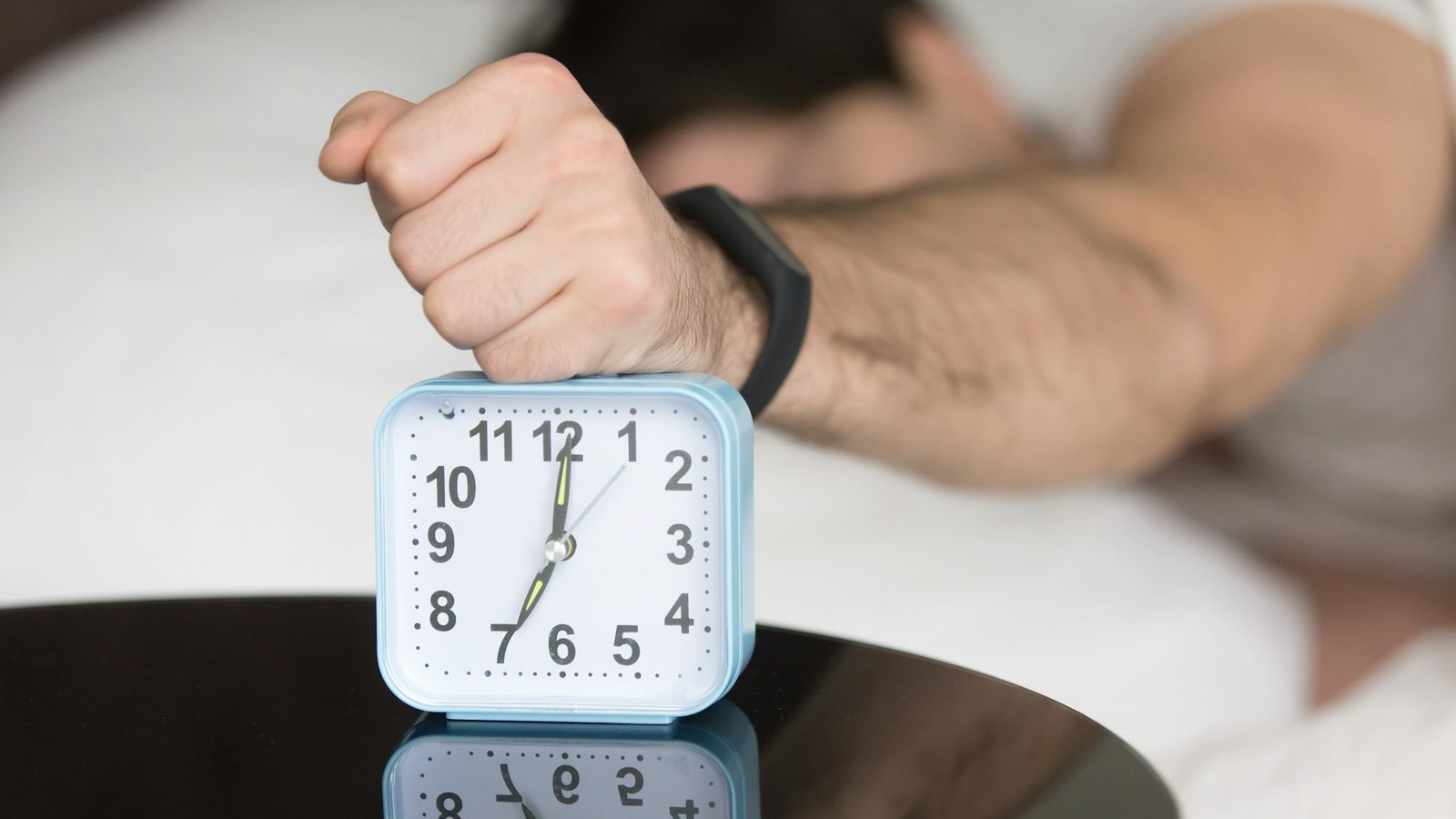
You sleep through your alarm mainly because of one of four things: you're not getting enough sleep, the alarm interrupts deep sleep, your body clock runs later than your wake time, or you switched the alarm off during sleep inertia and don't remember. Habituation to the same alarm sound, alcohol, some medications and sleep disorders like sleep apnea can make it worse. The fix is to get enough sleep at a regular time, use light first thing, and use an alarm you can't turn off without getting up.
Almost everyone has slept through an alarm at least once — or overslept on a big day for work and school. If you regularly sleep through your morning alarm, though, it isn't bad luck. Research suggests there are a handful of common causes, and most of them are about sleep habits rather than the alarm clock. Something specific is making you hard to wake — and once you find out why you sleep through it, it's very fixable. Heavy sleepers and light sleepers alike can learn to wake on time.
Key takeaways
- Sleep debt is the number-one cause. Adults need seven or more hours; short sleep makes you harder to wake and groggier when you do.
- Many "slept through it" mornings are actually "switched it off". Sleep inertia lets you dismiss an alarm and forget it.
- A late body clock means a 6 a.m. alarm lands in your biological night.
- The same sound every day stops working as your brain habituates to it.
- See a sleep specialist if you still sleep through alarms after seven to nine hours of sleep.
What happens in your brain when the alarm goes off
Waking isn't a switch. When the alarm goes off, the sound has to get past a sleeping brain that is actively filtering noise, and then a groggy brain has to decide what to do about it.
How easily alarm sounds get through depends on your sleep stages. In deep (slow-wave) sleep, the auditory arousal threshold is highest — it takes a louder or longer sound to wake you than in lighter sleep. Some deep sleepers are also built to stay asleep: in one study, people who naturally produce more sleep spindles (bursts of brain activity during light sleep) stayed asleep through more noise.
Then comes sleep inertia: the heavy, foggy state after waking, when reaction time, memory and judgment are impaired. It usually fades within 15–30 minutes but can last longer after short sleep or a deep-sleep awakening. During those minutes you can sit up, switch off an alarm, lie back down — and have no memory of it.
7 common causes of sleeping through alarms
1. Sleep debt, sleep deprivation and poor sleep quality
The single biggest reason. When you're not getting enough sleep, your brain prioritises deep sleep and fights to stay there. The AASM and Sleep Research Society recommend at least seven hours of sleep a night for adults; many people who regularly sleep through alarms are getting five or six. If you sleep much longer at weekends, that's a clue you're running up a sleep debt during the week. Poor sleep quality and poor sleep habits — inconsistent sleep times, a late phone — add to it, and so does trouble falling asleep.
2. The alarm hits deep sleep
Deep sleep is concentrated in the first half of the night, but if you're short on sleep or went to bed late, there's more of it near the morning. An alarm that lands mid-deep-sleep is both harder to hear and leaves you groggier — making it easier to keep sleeping.
3. Your circadian rhythm runs late (delayed sleep phase)
Your internal clock decides when your body expects to wake. Night owls, teenagers and anyone with an irregular sleep schedule have a clock that runs late, so an early alarm rings at what is, biologically, the middle of the night. Researchers call the weekday–weekend mismatch social jet lag. In its extreme form it's delayed sleep phase disorder, a circadian rhythm sleep disorder where you can't fall asleep until very late and can't wake at a normal time.
4. You switch it off and keep sleeping without remembering
Thanks to sleep inertia, a lot of what looks like alarm failure — the alarm fails to wake you — is really "I turned my alarm off" and went on still sleeping. If your phone says the alarm was dismissed, this is you. The fix isn't a louder alarm; it's an alarm that can't be dismissed without a task.
5. Loud alarms stop working: your brain learns to ignore alarm sounds
Habituation is how your brain stops reacting to repeated, harmless stimuli — like the same alarm tone at the same time every morning. Loud alarms work for a while and then become easier to ignore. Multiple alarms make it worse: you learn that the first few don't count, just like hitting the snooze button.
6. Alcohol, late nights and medication
Alcohol fragments the second half of the night, so you sleep worse and may sleep deeper near the morning. Sedating medications — some sleep aids, antihistamines and antidepressants — can deepen sleep or prolong morning grogginess. Stress and late-night screens push your bedtime later and cut your sleep opportunity.
7. A sleep disorder or medical condition
Sometimes there's an underlying cause. Sleep apnea causes repeated breathing pauses that fragment sleep, leaving you exhausted and hard to wake. Hypersomnia, narcolepsy, depression, thyroid problems and other conditions can all show up as difficulty waking. ADHD is often linked to a delayed body clock and poor sleep timing, which can make early alarms especially hard.

Is sleeping through alarms a sign of ADHD or a sleep disorder?
It can be one sign among others, but not on its own. Sleeping through alarms is common in ADHD, partly because many adults with ADHD have a delayed circadian rhythm. It's also common in people who are simply sleep deprived. What points towards a sleep disorder is persistence despite enough sleep:
- you regularly sleep seven to nine hours and still can't wake up;
- you snore loudly, gasp or stop breathing at night (signs like sleep apnea);
- you're very sleepy during the day, or fall asleep at odd times;
- difficulty waking started suddenly, or with low mood.
If that's you, see a doctor or a sleep specialist. No alarm can treat a sleep disorder.
How to stop sleeping through your alarm
Match the fix to the cause.
| If the cause is… | Try this |
|---|---|
| Sleep debt | Go to bed 15–30 minutes earlier until you're getting seven-plus hours of sleep. Keep it for two weeks. |
| Deep sleep at wake time | A consistent bedtime and wake time so your sleep cycle ends near your alarm. |
| Late body clock | Bright light within an hour of waking; dim screens at night; same wake time at weekends. |
| Switching it off half-asleep | An alarm that needs a task to stop — math, typing, push-ups, a photo, a barcode. |
| Habituation | One alarm, not five; change the alarm tone every few weeks. |
| Going back to sleep after | A second "wake-up check" ring a few minutes later. |
| Late-night scrolling | Block the apps that keep you up from a set bedtime. |
| Possible disorder | See a doctor or sleep specialist. |
Improving sleep: build a sleep routine and sleep hygiene that make waking easier
Good sleep hygiene isn't glamorous, but it's the base everything else stands on: a consistent sleep schedule, a cool, dark bedroom, no caffeine after mid-afternoon, and a wind-down without your phone. Our guide on how to sleep better at night walks through each one. Improving sleep quality and morning alertness has a bidirectional relationship: better nights make easier mornings, and a fixed wake-up time makes better nights. If you need more sleep, go to bed earlier rather than sleeping later in the morning.
Use a wake-up alarm a heavy sleeper can't sleep through
For the mornings when biology still wins, change the alarm itself. Loud alarms and sunrise alarms help you notice it; they don't stop you from switching it off. What does is an alarm that needs your body and brain:
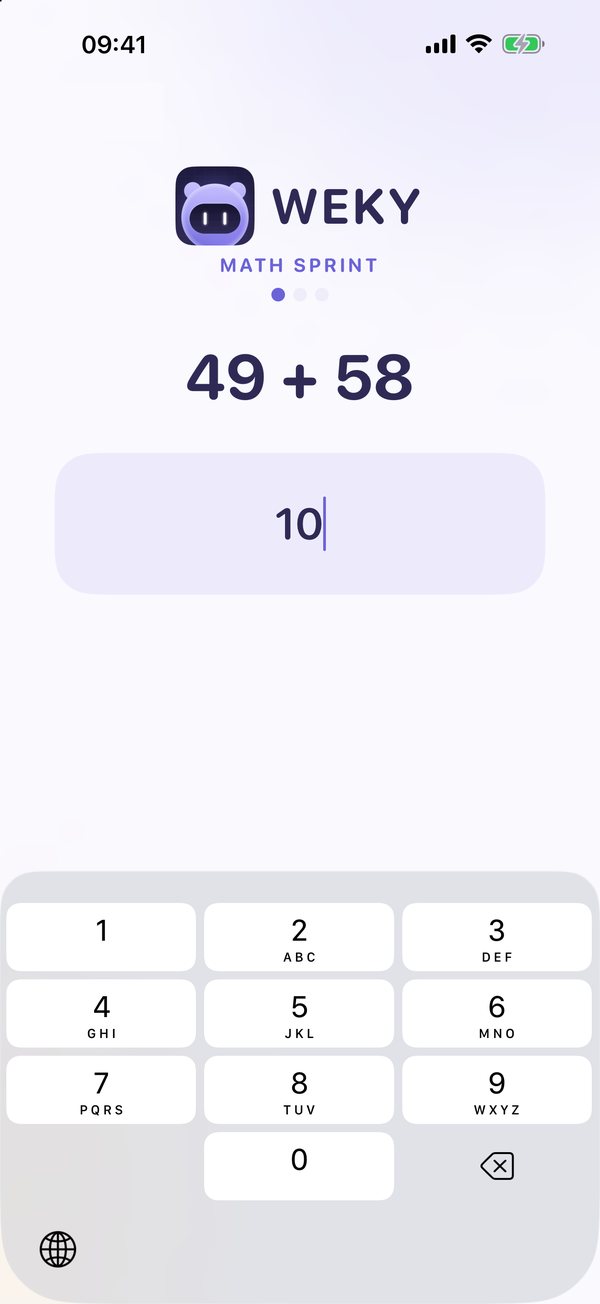
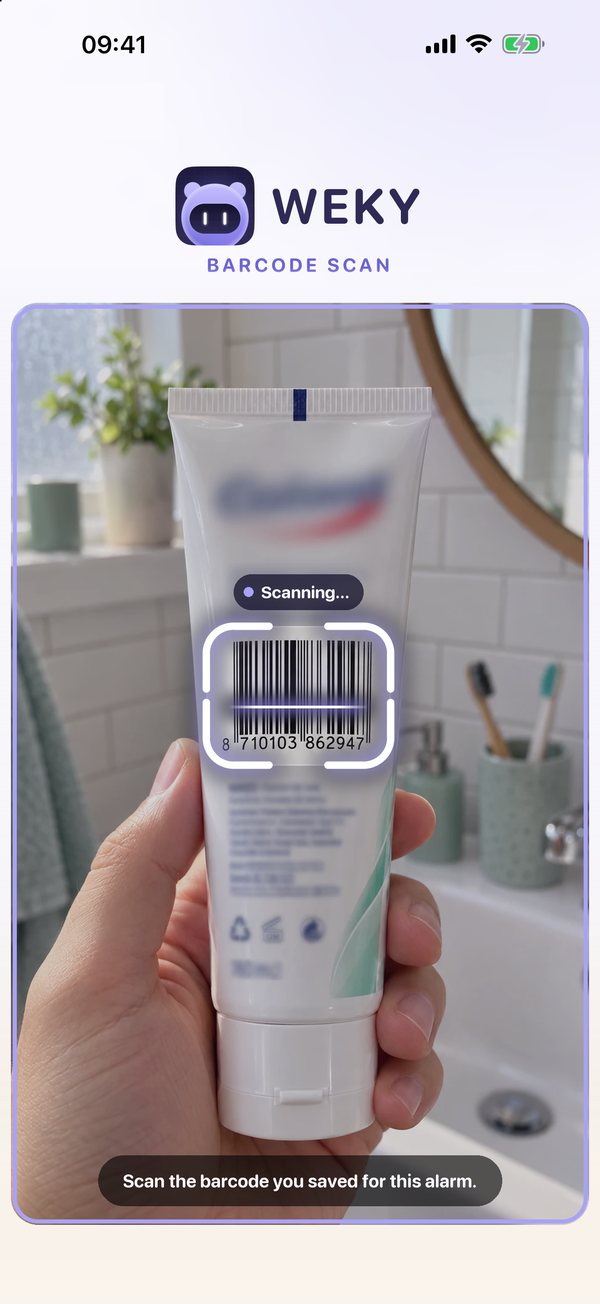
That's what we built Weky to do. Its alarm only stops after a wake-up mission — ten of them, including math, typing, push-ups, squats, an object hunt, a photo of the sky or your made bed, and a barcode scan. You can stack several on one alarm. About ten minutes later, a wake-up check rings again with the same or a random mission, so you can't slip back to sleep. There's no snooze. And to fix the night end of the problem, Weky can block the apps you scroll in bed from a start time you choose until your morning mission is done.
And it rings every time. Weky schedules a real system alarm, so it rings on the lock screen in Silent mode, Sleep, Work or any Focus — even after a force-quit or a restart — without running in the background or draining your battery.
Weky also keeps a history of every wake-up, including which weekday you're weakest on, and shows your Apple Health sleep next to each morning — so you can see whether the late mornings follow the short nights.
Stop multiple alarms and snoozing
If you set multiple alarms, you're training yourself to ignore the first ones. Replace them with one alarm you have to get up for. Here's the full guide on how to stop hitting snooze, and our comparison of the best alarm apps for heavy sleepers.
When to talk to a doctor
Talk to a doctor if you still sleep through alarms after several weeks of enough sleep at regular times, if you snore loudly or wake gasping, if you're excessively sleepy during the day, or if difficulty waking came with low mood or other symptoms. Persistent difficulty waking is a real medical complaint, and sleep medicine has good tests and treatments for the conditions behind it.
This article is general information, not medical advice.
Frequently asked questions
What does it mean if you sleep through your alarm?
Most often it means you're short on sleep, the alarm caught you in deep sleep, or your body clock runs later than your wake time. It can also mean you switched the alarm off during sleep inertia and don't remember. Occasionally it's a sign of a sleep disorder such as sleep apnea or hypersomnia.
Is sleeping through alarms ADHD?
Not by itself, but it's common in ADHD. Many adults with ADHD have a delayed body clock and trouble with sleep timing, which makes early alarms land in their biological night. If you suspect ADHD, talk to a doctor rather than self-diagnosing from your mornings.
How do I stop sleeping through my alarm?
Get at least seven hours of sleep at a regular time, put light into your room as soon as you wake, and use an alarm that needs a task to stop — ideally one that makes you leave the bed and rings again a few minutes later. If nothing works, see a sleep specialist.
Why can't I wake up to my alarm anymore?
A change usually has a cause: a later bedtime, more screen time at night, new medication, stress, alcohol, a new job with an earlier start, or habituation to the same alarm sound. Look at what changed in the weeks before it started.
Can medication make it harder to wake up to an alarm?
Yes. Sedating medicines — some sleep aids, antihistamines, antidepressants and others — can deepen sleep or leave you groggy in the morning. Don't stop a prescribed medication on your own; ask your doctor or pharmacist about timing.
Do vibrating or light-based alarms help you wake up?
They can help you notice the alarm — a sunrise alarm also gives your body clock a light signal. Neither stops you from switching the alarm off and going back to sleep, which is the more common problem for heavy sleepers.
References
- Tassi P, Muzet A. Sleep inertia. Sleep Medicine Reviews, 2000;4(4):341–353.
- Hilditch CJ, McHill AW. Sleep inertia: current insights. Nature and Science of Sleep, 2019;11:155–165.
- Dang-Vu TT, McKinney SM, Buxton OM, et al. Spontaneous brain rhythms predict sleep stability in the face of noise. Current Biology, 2010;20(15):R626–627.
- Roenneberg T, Allebrandt KV, Merrow M, Vetter C. Social jetlag and obesity. Current Biology, 2012;22(10):939–943.
- Bijlenga D, Vollebregt MA, Kooij JJS, Arns M. The role of the circadian system in the etiology and pathophysiology of ADHD: time to redefine ADHD? ADHD Attention Deficit and Hyperactivity Disorders, 2019;11(1):5–19.
- Rankin CH, Abrams T, Barry RJ, et al. Habituation revisited. Neurobiology of Learning and Memory, 2009;92(2):135–138.
- Watson NF, Badr MS, Belenky G, et al. Recommended amount of sleep for a healthy adult. Sleep, 2015;38(6):843–844.
- Wright KP, McHill AW, Birks BR, et al. Entrainment of the human circadian clock to the natural light-dark cycle. Current Biology, 2013;23(16):1554–1558.