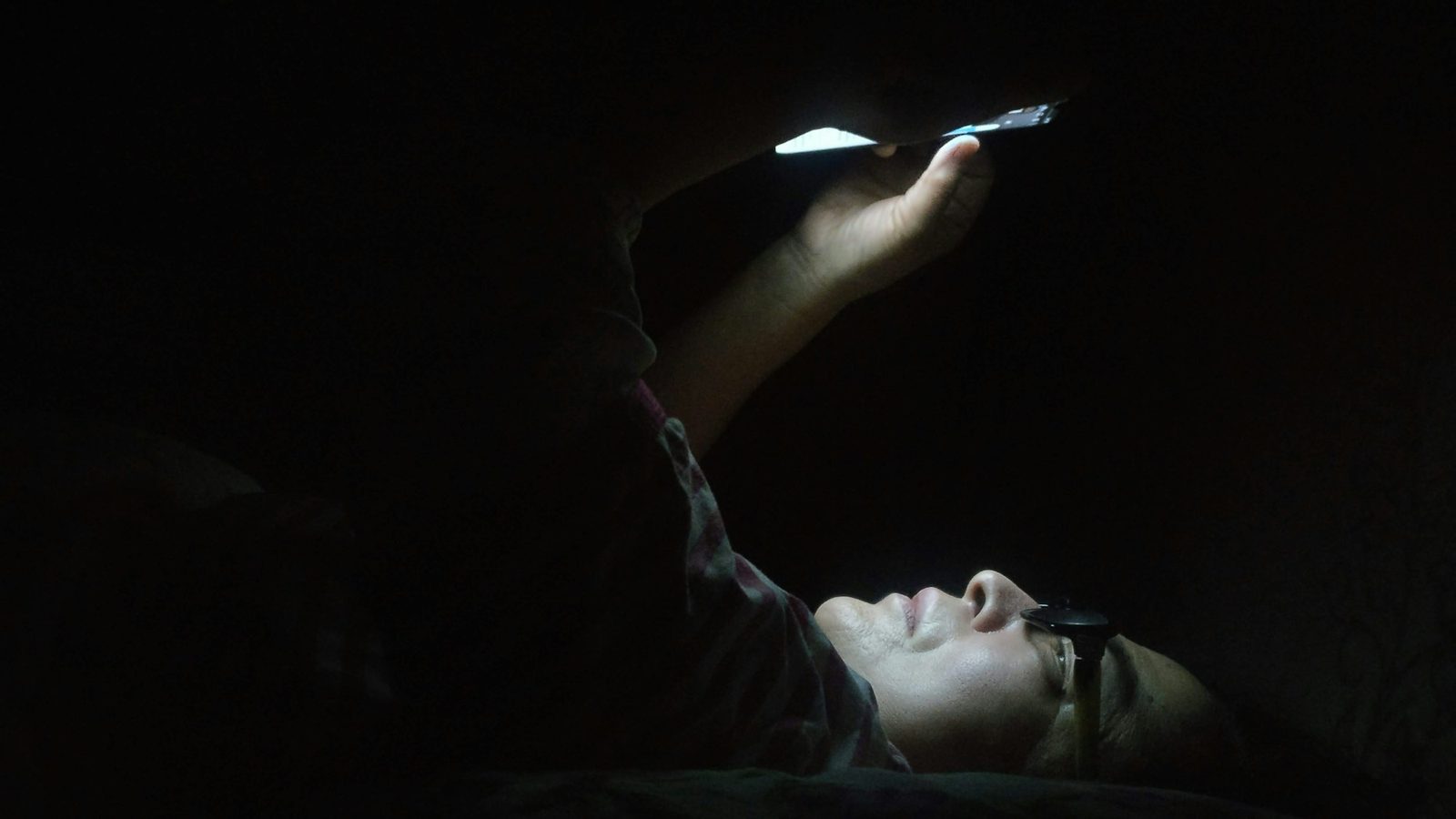
Revenge bedtime procrastination is staying up late on purpose — scrolling, watching shows, gaming — to reclaim personal time you didn't get during the day, even though you're tired and know you'll pay for it tomorrow. It's driven by busy, stressful days, low self-control at night and endlessly engaging screens. To stop it: protect some free time earlier, set a fixed wind-down time, block the apps you lose your nights to, and keep your wake time the same every day.
The phrase spread in English in 2020, translated from a Chinese expression for staying up late out of revenge against long working days. It struck a nerve because almost everyone recognised it, and by 2021 "revenge bedtime procrastination" was everywhere. Researchers had already been studying the underlying behaviour for years under a plainer name: bedtime procrastination — going to bed later than you intended, without any external reason to stay up.
Key takeaways
- It's a trade, not a mistake. You swap sleep for time that feels like yours.
- It's common and linked to short sleep. People who procrastinate at bedtime get less sleep and feel more tired.
- Self-control is lowest at night, and screens are designed to keep you watching.
- It isn't insomnia. You could sleep; you choose not to go to bed yet.
- The fix gives your evening a boundary, not a punishment — free time earlier, apps locked later.
What is revenge bedtime procrastination (sleep procrastination)?
Bedtime procrastination has three parts: you delay going to bed, you have no good reason to (no work, no emergency), and you know it will leave you short on sleep. The "revenge" version adds the motive: you've spent the whole day on work, school, commuting or caring for others, and the late evening is the only time nobody is asking anything of you. Staying up feels like taking something back.
It usually looks ordinary: watching TV for one more episode, one more video, scrolling on your phone in bed long after you meant to put it down — losing track of time. Some researchers separate delaying bedtime from "while-in-bed procrastination": you're in bed, but the phone keeps you from going to sleep. The activity isn't the point. The point is that the time is yours.
What causes bedtime procrastination?
Days without personal time
Long work hours, long commutes, parenting, studying — the less free time you have during the day, the more valuable those late hours feel. People with high daytime stress are especially likely to sacrifice sleep for leisure time.
Self-control runs out at night
Researchers studying bedtime procrastination describe it as a self-regulation problem: in the evening, after a day of decisions and effort, it's harder to stop doing something pleasant to do something sensible. One study found that people with lower self-control at the end of the day watched more television and slept less.
Screens with no stopping point: why you scroll
Autoplay, infinite feeds and group chats remove every natural moment to stop. That's why most bedtime procrastination now happens on electronic devices — and why phone use in bed is linked to worse sleep quality and more fatigue.
A late body clock and the ADHD brain
Night owls genuinely feel more awake late in the evening, so going to bed at 10:30 feels unnatural. Adults with ADHD often report strong sleep procrastination — some describe it as an ADHD symptom, linked to differences in self-regulation and a tendency towards later sleep timing.
Signs of revenge bedtime procrastination
- You regularly go to bed later than you planned, and you know it while it's happening.
- There's no good reason you're up — you're not working or unable to sleep.
- The late hours feel like the only free time you have.
- You're tired the next day, and promise yourself tonight will be different.
- The pattern is worse after demanding or stressful days.
What it costs: lack of sleep and the bedtime procrastination cycle
Revenge bedtime procrastination is self-reinforcing. You stay up later, so you sleep less — a delayed sleep time and a fixed alarm mean sleep deprivation. Insufficient sleep makes the next day harder and more stressful, and your self-control the following evening is even lower — so the late night feels even more deserved. Adults need seven or more hours of sleep. If you don't get enough sleep regularly, it's linked to sleep problems, poorer mood, concentration and health, and higher risk of depression and anxiety. Revenge bedtime procrastination may feel harmless one night at a time; the habit of revenge bedtime procrastination is what adds up.
The cost also lands in the morning: late nights make waking up harder and the snooze button more tempting. If that's your pattern, read how to stop hitting snooze.
How to stop revenge bedtime procrastination and get enough sleep
Reducing bedtime procrastination works best with a mix of sleep hygiene and structure, rather than willpower alone. The aim is better sleep without giving up the evening.
1. Move some "me time" earlier
The behaviour is a protest against days with no space. Give yourself 20–30 minutes that are genuinely yours earlier in the evening — a walk, a show, a game — so midnight isn't the only option.
2. Set a wind-down alarm, not just a wake-up alarm
Pick a time to start getting ready for bed — the hour before bed — and set an alarm for it. A decision made at 6 p.m. is easier to follow than one you have to make at midnight.
3. Block the apps you lose your nights to
This is the single most effective step, because it doesn't rely on self-control. Choose the specific apps — the feed, the video app, the game — and lock them from your wind-down time. In Weky, app blocking is part of your alarm: pick the apps and when blocking starts, and they stay locked until you've finished your morning mission. You keep your evening; you lose the 1 a.m.
4. Keep the phone out of the bedroom
Charge it in the kitchen. Use a separate alarm, or one you have to get up to stop anyway. If the phone isn't within reach, bedtime scrolling mostly disappears.
5. Make bedtime something to look forward to
Reading a book, a warm shower, music, a comfortable bed. A good bedtime routine competes with the screen instead of just forbidding it.
6. Use the 3-2-1 rule as a structure
No food three hours before bed, no work two hours before, no screens one hour before. It's not a clinical rule, but it gives your evening clear steps.
7. Fix your wake time
Getting up at the same time every day builds sleep pressure, helps you sleep early and improve sleep quality, so you're genuinely sleepy at night and staying up feels less appealing. Our guide to how to wake up early shows how to shift it gradually.
8. Address the daytime
If your days leave no room for rest, no sleep hygiene trick will fully fix it. Look for small boundaries — finishing work on time, sharing evening chores, a short break after work — that reduce the need for revenge.
How Weky helps you go to bed on time
Most sleep advice asks you to decide, again, every night. Weky lets you decide once:
- App blocking per alarm: the apps you choose are locked from your bedtime until your morning mission is done.
- Wake-up missions make the morning after a late night non-negotiable — no snooze button.
- Sleep from Apple Health, shown next to each morning, so you can see what the late nights actually cost.
- Streaks and habits turn early nights and on-time mornings into a record you don't want to break.
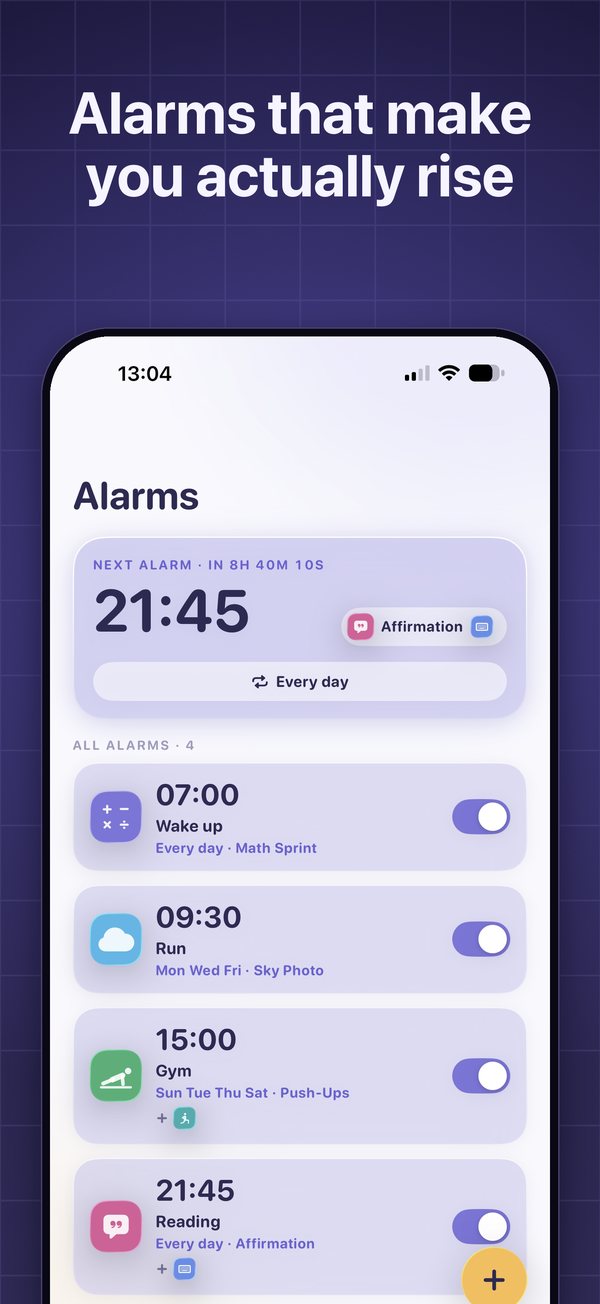
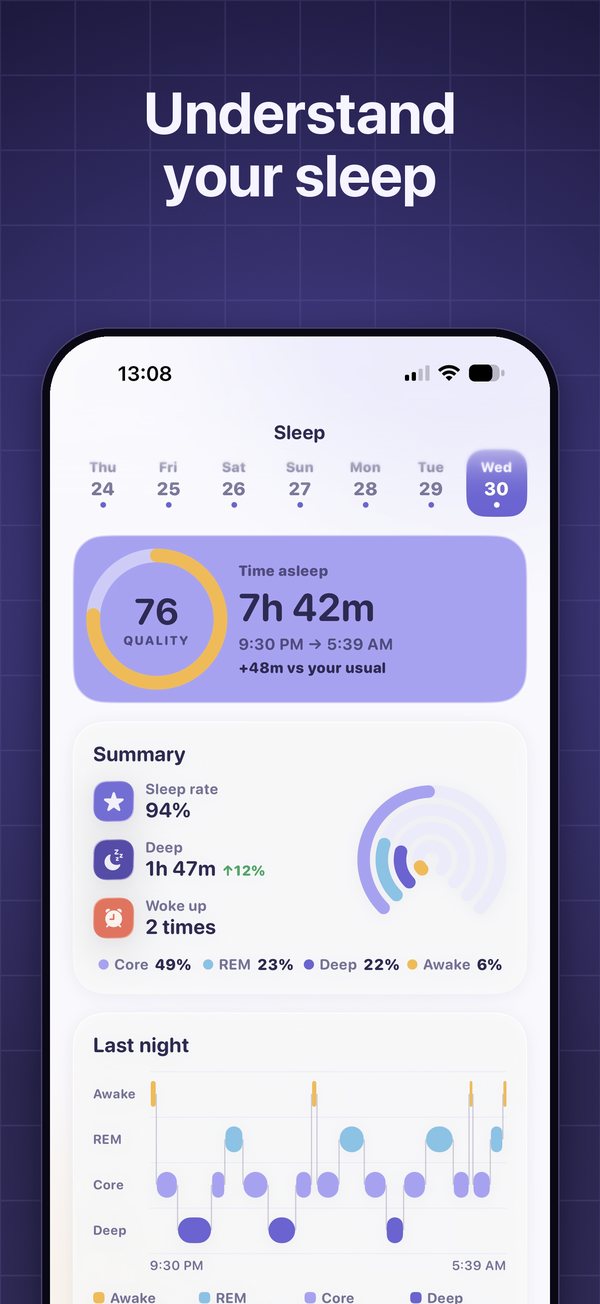
And it rings every time. Weky schedules a real system alarm, so it rings on the lock screen in Silent mode, Sleep, Work or any Focus — even after a force-quit or a restart — without running in the background or draining your battery.
When it might be something more (insomnia, anxiety, ADHD)
If you stay up because you can't fall asleep, that's insomnia, which has its own treatments. If staying up is a way to avoid thoughts or feelings, or comes with persistent low mood or anxiety, talk to a doctor, therapist or psychiatry service. And if your evenings involve compulsive phone use you can't control even when you want to, that's worth discussing too. For the screen side of the problem, see how to stop scrolling at night.
This article is general information, not medical advice.
Frequently asked questions
What is revenge bedtime procrastination?
It's choosing to stay up late — usually on a phone, TV or games — even though you're tired and know you'll regret it, to reclaim free time you didn't have during the day. Researchers call the broader behaviour bedtime procrastination: going to bed later than intended without an external reason.
What is revenge bedtime procrastination a symptom of?
It's usually a sign that your days have too little free time or too much stress, not a disorder in itself. It's linked to lower self-control at the end of the day, long work hours, and evening screen habits. If it comes with low mood or anxiety, those are worth addressing directly.
Is revenge bedtime procrastination linked to ADHD?
Many adults with ADHD report it strongly, likely because of differences in self-regulation and reward processing, and a tendency towards a later body clock. External structure — set bedtimes, blocked apps, the phone outside the bedroom — tends to help more than willpower.
How do you fix revenge bedtime procrastination?
Protect some personal time earlier in the day, set a fixed wind-down time with an alarm, block the apps you lose your nights to from that time, keep your phone out of the bedroom, and make bedtime something you look forward to. Keep your wake time fixed so sleep pressure builds in the evening.
What is the 3-2-1 rule before bed?
A popular guideline: no food 3 hours before bed, no work 2 hours before, and no screens 1 hour before. It isn't a clinical rule, but it's a useful structure for a wind-down.
How is revenge bedtime procrastination different from insomnia?
With insomnia you want to sleep but can't. With bedtime procrastination you could sleep but choose not to go to bed. The two can overlap — late screens can make falling asleep harder — but the fixes are different.
References
- Kroese FM, De Ridder DT, Evers C, Adriaanse MA. Bedtime procrastination: introducing a new area of procrastination. Frontiers in Psychology, 2014;5:611.
- Kroese FM, Evers C, Adriaanse MA, de Ridder DTD. Bedtime procrastination: a self-regulation perspective on sleep insufficiency in the general population. Journal of Health Psychology, 2016;21(5):853–862.
- Exelmans L, Van den Bulck J. Self-control depletion and sleep duration: the mediating role of television viewing. Psychology & Health, 2018;33(10):1251–1268.
- Exelmans L, Van den Bulck J. Bedtime mobile phone use and sleep in adults. Social Science & Medicine, 2016;148:93–101.
- Bijlenga D, Vollebregt MA, Kooij JJS, Arns M. The role of the circadian system in the etiology and pathophysiology of ADHD. ADHD Attention Deficit and Hyperactivity Disorders, 2019;11(1):5–19.
- Watson NF, Badr MS, Belenky G, et al. Recommended amount of sleep for a healthy adult. Sleep, 2015;38(6):843–844.