To stop scrolling at night, change your environment instead of relying on willpower: block the apps you scroll from a set bedtime, charge your phone outside the bedroom, use a separate alarm clock, and replace the feed with a calm, finite wind-down like a book. Late-night phone use delays sleep and makes mornings harder, and most people scroll because they're tired, not in spite of it.
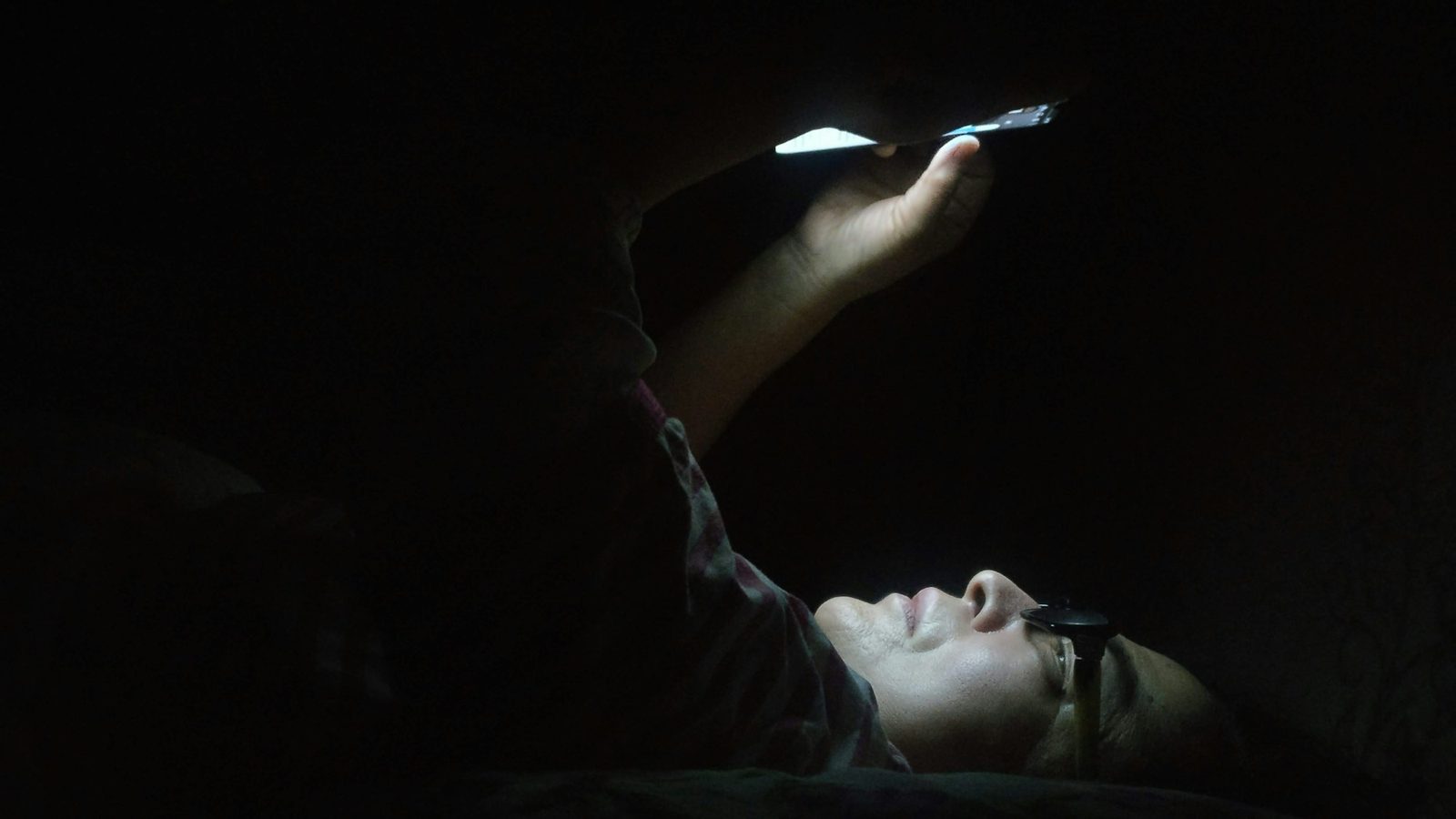
You get into bed tired. You open your phone "for a minute" to scroll through social media. The feed has no bottom, so there's no natural moment to stop. Every swipe might be the interesting one. An hour later it's midnight, your brain still buzzing, and tomorrow's alarm is now six hours away instead of seven and a half. You wanted to stop. You can't stop. Phones have become the last thing most people reach for at night and the first thing in the morning.
Key takeaways
- Bedtime scrolling has a name: bedtime procrastination — delaying sleep for no good reason, often to reclaim time that feels like your own.
- Phone use in bed is linked to worse sleep. Adults who use their phone after lights-out report poorer sleep quality and more fatigue.
- It's the content more than the light. Engaging feeds keep your brain alert; blue light is a smaller factor.
- Willpower is weakest at midnight. Decide earlier: block apps on a schedule and get the phone out of reach.
- Fix both ends: scrolling late makes waking up harder, so the morning needs a plan too.
Why is it so hard to stop doomscrolling at night, even when you're tired?
Feeds are built to be endless
There's no last post, no chapter end, no credits. Infinite scroll removes every natural stopping point, and the unpredictable mix of boring and fascinating posts works like a slot machine — you keep pulling because the next one might pay off. That's the dopamine loop people describe, and it's by design. Endless scrolling turns into mindless scrolling, and the habit of scrolling becomes automatic.
Tired brains have less self-control
Self-control is lowest at the end of the day. The decision to put the phone down is being made by the most tired version of you, which is why "just one more video" feels so reasonable at 11:50.
Bedtime procrastination: it feels like the only personal time that's yours
Researchers studying bedtime procrastination — going to bed later than you intended without any external reason — found it's common and linked to getting less sleep. The popular phrase for it is "revenge bedtime procrastination": after a day that belonged to work, school or family, the hour of scrolling feels like reclaiming something. You're not lazy; you're trying to get your evening back, at the cost of your morning.
Doomscrolling and sleep: what phone use at night does to your bedtime
Scrolling on your phone at night can interfere with sleep in two ways. In a study of adults, those who used their phone in bed after lights-out reported worse sleep quality, more insomnia symptoms and more fatigue. A systematic review in young people found screen use at bedtime was associated with later bedtimes and shorter sleep in the large majority of studies.
Light exposure plays a part: in a controlled study, reading on a light-emitting e-reader before bed suppressed melatonin, delayed the circadian rhythm and left people less alert the next morning than reading a paper book. But for most people, the bigger problem is what's on the screen. News, arguments, group chats and short videos keep your brain switched on long after you put the phone down. Doom scrolling bad news adds anxiety on top. Blue light filters and dimming your lights help a little; they don't make a feed less engaging.
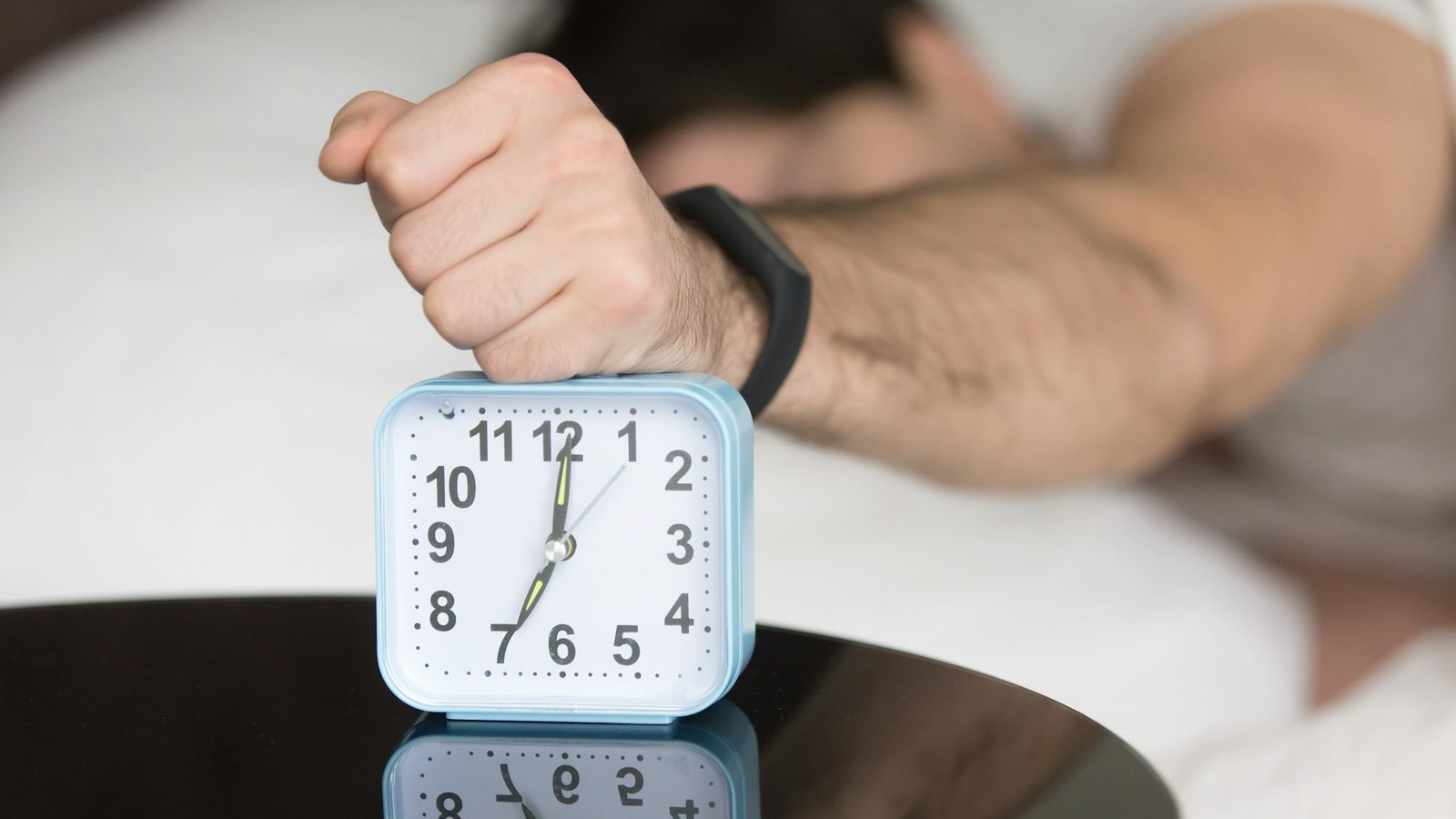
And the cost lands in the morning. Less sleep means a harder wake-up, more snoozing and more grogginess — which is why late-night scrolling and hitting snooze so often travel together.
8 ways to stop scrolling at night and break the cycle of doomscrolling
1. Block the apps on a schedule
The most effective fix is the one that makes the decision for you. Pick the apps you lose the night to — the feeds, the video app, the group chat — and block them from a set bedtime. You can use iPhone's built-in app limits, a dedicated blocker, or an alarm that does it for you. In Weky, app blocking is part of each alarm: you choose the apps and the time blocking starts, and they stay locked until that alarm's morning mission is done. No midnight bargaining, and no opening them first thing in bed either.
2. Get the phone out of reach
Put your phone away: charge it in another room, or at least across the bedroom. If you keep your phone on your pillow, it wins — you'll check the time and end up scrolling. If it's in the kitchen, you'll be less tempted and you'll probably just go to sleep. A phone-free bedroom at night is the simplest bedroom routine there is.
3. Use a separate alarm clock — or an alarm that makes you get up
"I need my phone for the alarm" is how it ends up in bed. Either buy a cheap alarm clock, or use an alarm that you have to get up to stop anyway — like a barcode you scan in the bathroom. Then the phone can live across the room.
4. Set a digital sunset 30–60 minutes before bed
Pick a time when screens stop — 30 minutes is a realistic start, an hour is better. The 3-3-3 rule (no alcohol, food or screens three hours before bed) is a popular version; it's not a clinical rule, but the screen part is sound.
5. Replace the feed with something that ends
Build a bedtime routine that helps you soothe your brain: a paper book, a stretch, a warm shower, podcasts with the screen off, instrumental music, or a sleep timer on calm sounds. The key is that it's calm and finite. A book has chapters; a feed doesn't.

6. Write tomorrow down
If your mind is racing, write a to-do list for tomorrow before bed. In a sleep-lab study, people who spent five minutes writing a to-do list fell asleep faster than people who wrote about what they'd already done. Get it out of your head and onto paper.
7. Turn off notifications and switch to grayscale
Every notification is an invitation to use your phone. Turn on a Sleep Focus that silences everything except calls from favourites, and try grayscale in Accessibility settings. A grey Instagram is a lot less interesting at midnight.
8. Fix the morning so the night follows
A fixed wake time builds the sleep pressure that makes you genuinely sleepy at night and helps you get better sleep, and makes late scrolling hurt in a way you can feel. Pair app blocking with an alarm you can't snooze, and the two ends of the problem reinforce each other.
How Weky fixes the night and the morning together
Most apps solve one half. App blockers stop the scrolling but don't get you up; alarms get you up but don't stop the scrolling. Weky does both in one place — and you don't need a separate blocker subscription on top of your alarm.
- App blocking per alarm. Pick the apps and when blocking starts — 10 p.m., say. They stay locked until that alarm's mission is done in the morning.
- Ten wake-up missions — math, typing, push-ups, squats, photos, a barcode scan, shake, affirmation — so the morning alarm actually gets you out of bed.
- No snooze, and a wake-up check ten minutes later.
- Sleep from Apple Health beside each morning, so you can see what a late night did to the next day.
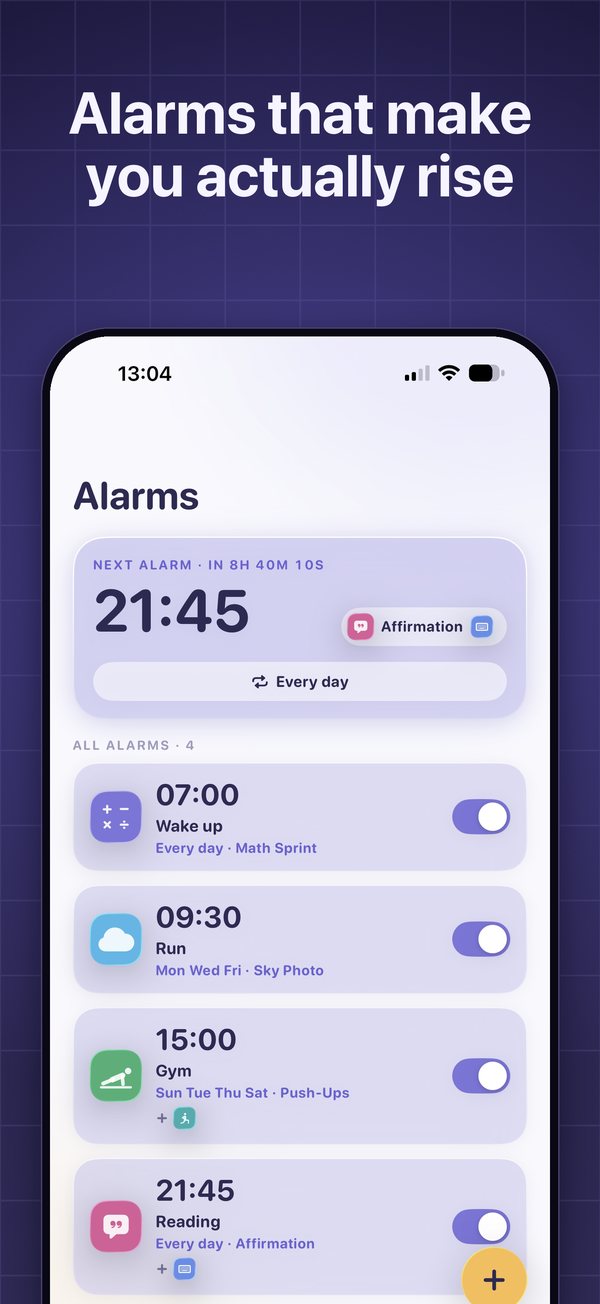
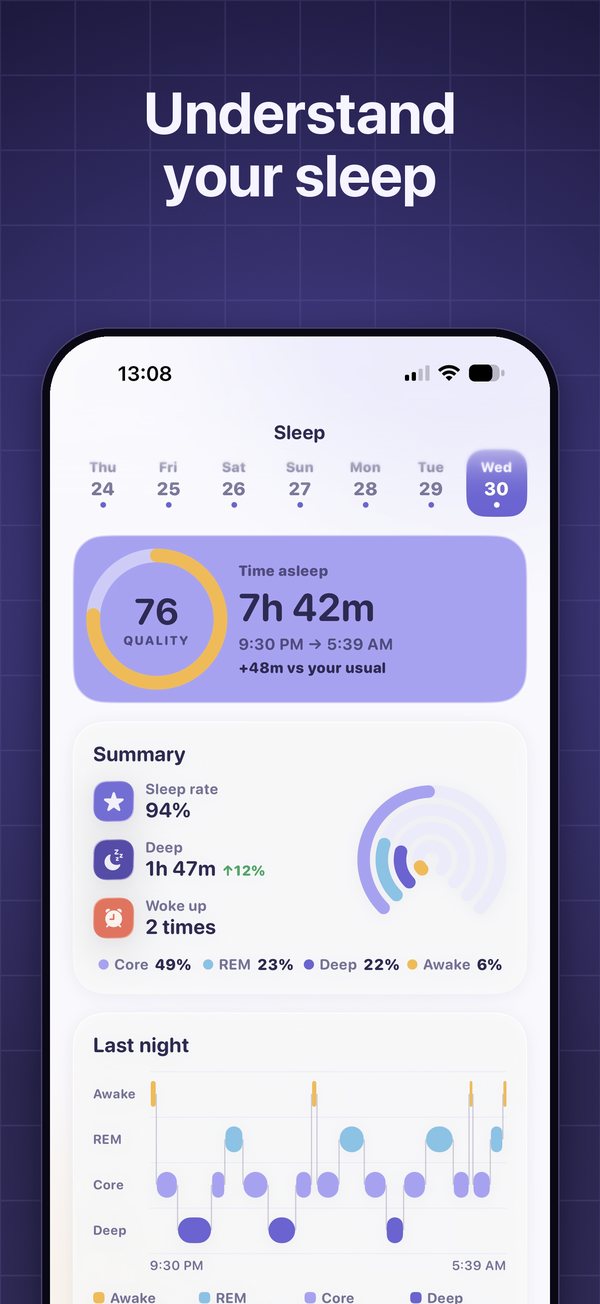
And it rings every time. Weky schedules a real system alarm, so it rings on the lock screen in Silent mode, Sleep, Work or any Focus — even after a force-quit or a restart — without running in the background or draining your battery.
When late-night scrolling is a sign of something deeper
Sometimes scrolling is a symptom, not the problem. If you scroll late at night because you can't sleep, you might have chronic insomnia. If you scroll to avoid thoughts, anxiety or low mood might be driving it. ADHD is often linked to difficulty stopping and later sleep timing. And if you feel unable to stop despite wanting to, and it's affecting your work or relationships, that's worth talking about with a doctor or therapist.
For the sleep side, start with our guide on how to sleep better at night, and if mornings are the battle, read why you sleep through your alarm.
This article is general information, not medical advice.
Frequently asked questions
What is the 3-3-3 rule for sleep?
A popular shorthand: no alcohol, no food and no work or screens in the 3 hours before bed. It isn't a clinical guideline, but the screen part matches the evidence that late phone use delays sleep. For many people, 30–60 minutes screen-free before bed is a realistic start.
Why is it so hard to stop scrolling at night, even when I'm tired?
Feeds are designed to be endless and unpredictable, which keeps your brain looking for the next reward. At night your self-control is lowest, and for many people the late evening is the only time that feels like their own — so they stretch it. Researchers call this bedtime procrastination.
How long before bed should I stop using my phone?
Aim for at least 30 minutes, ideally an hour. The biggest benefit comes less from the light and more from stopping the engaging content that keeps your brain alert.
Do people with ADHD scroll a lot?
Many people with ADHD report difficulty stopping scrolling, partly because of differences in attention and reward processing and a tendency towards later sleep timing. External limits — blocked apps, the phone out of the bedroom — tend to work better than willpower.
Why is my mind so overactive at night?
Stress, unfinished tasks and stimulating content right before bed keep your nervous system alert. Writing a short to-do list for tomorrow before bed has been shown to help people fall asleep faster.
What can I do before bed instead of scrolling?
Read a paper book, stretch, take a warm shower, listen to music or a podcast with the screen off, or write tomorrow's to-do list. Choose something calm that has an end, unlike an infinite feed.
References
- Kroese FM, De Ridder DT, Evers C, Adriaanse MA. Bedtime procrastination: introducing a new area of procrastination. Frontiers in Psychology, 2014;5:611.
- Exelmans L, Van den Bulck J. Bedtime mobile phone use and sleep in adults. Social Science & Medicine, 2016;148:93–101.
- Chang AM, Aeschbach D, Duffy JF, Czeisler CA. Evening use of light-emitting eReaders negatively affects sleep, circadian timing, and next-morning alertness. PNAS, 2015;112(4):1232–1237.
- Hale L, Guan S. Screen time and sleep among school-aged children and adolescents: a systematic literature review. Sleep Medicine Reviews, 2015;21:50–58.
- Scullin MK, Krueger ML, Ballard HK, et al. The effects of bedtime writing on difficulty falling asleep: a polysomnographic study comparing to-do lists and completed activity lists. Journal of Experimental Psychology: General, 2018;147(1):139–146.
- Bijlenga D, Vollebregt MA, Kooij JJS, Arns M. The role of the circadian system in the etiology and pathophysiology of ADHD. ADHD Attention Deficit and Hyperactivity Disorders, 2019;11(1):5–19.