To wake up early, move your wake time earlier by about 15 minutes every few days instead of all at once, go to bed early enough to still get seven or more hours of sleep, get bright light within an hour of waking, and keep the same wake time at weekends. Then protect the first minute: one alarm, out of reach or behind a task, and no snooze button. In a 2019 trial, night owls who followed this kind of routine shifted their sleep about two hours earlier in three weeks.
If you want to wake up early and you've tried to become an early bird before, you probably know how it goes. Day one, trying to wake up at 5 feels heroic. Day two, you hit the snooze button twice. By Saturday you sleep until ten, and Monday it's even harder to get up in the morning than when you started. That's not a lack of discipline. It's what happens when you ask your body clock to jump two hours overnight. The benefits of waking up early — quiet time in the morning, a calmer start, the hours of the morning for yourself — come from a plan, not a single brave alarm clock setting.
Key takeaways
- Go gradually. Shift your wake time 15 minutes earlier every three or four days. Big jumps feel like jet lag.
- Light is the steering wheel. Bright morning light pulls your circadian rhythm earlier; bright evening light pushes it later.
- Bedtime follows the alarm, not the other way round. Count back at least seven and a half hours.
- Weekends count. Sleeping in undoes the week's progress — researchers call it social jet lag.
- Win the first minute. One alarm, out of reach or behind a mission, no snooze.
Why is it so hard to get up early? (Circadian rhythm and sleep patterns)
Your body runs on an internal clock — your circadian rhythm — that decides when you feel sleepy and when you feel alert. It's set mainly by light. If your clock is running late, an early alarm rings in the middle of your biological night, and every cell in your body votes to go back to sleep.
Three things usually keep the clock late:
- Evening light and screens. Bright light in the evening delays your clock and harms the quality of your sleep. In one study, reading on a light-emitting device before bed delayed melatonin and left people less alert the next morning.
- Dim mornings. If you go from a dark bedroom to an indoor desk, your clock never gets the "it's morning" signal from light in the morning.
- Weekend lie-ins. A two-hour lie-in on Saturday is like flying two time zones west and back every week.
The good news: the clock moves, and you can become a morning person even if you naturally wake up later. When researchers took people camping with only natural light for a week, their internal clocks shifted roughly two hours earlier and the gap between night owls and early birds shrank.
How to wake up early every day: a 3-week plan
This is the plan we'd give a friend who wants to wake up at 6am but currently gets up at 7:30 — the same approach works if you want to wake up at 5am. Adjust the times to your own goal.
| Days | Wake time | In bed by | Focus |
|---|---|---|---|
| 1–3 | 7:15 | 11:30 p.m. | Light within 10 minutes of waking |
| 4–6 | 7:00 | 11:15 p.m. | Last coffee before 2 p.m. |
| 7–9 | 6:45 | 11:00 p.m. | Screens off 30 minutes before bed |
| 10–12 | 6:30 | 10:45 p.m. | Same wake time on the weekend |
| 13–15 | 6:15 | 10:30 p.m. | Morning walk or quick workout |
| 16–21 | 6:00 | 10:15 p.m. | Hold it — every day |
Why 15 minutes? Small steps let your body clock keep up. Lab research shows that moving bedtimes earlier shifts the body's melatonin rhythm, and a 2019 trial with night owls found that three weeks of earlier sleep and wake times, morning light, fixed meal times, no caffeine after mid-afternoon and morning exercise moved their sleep about two hours earlier — with better mood and morning performance, and no loss of sleep.
9 ways to make waking up early easier
1. Set an alarm for your wake time first, then choose your bedtime
You can't force yourself to fall asleep, but you can control when you get up. Pick the time you want to wake up early every day and count back at least seven and a half to eight hours. Most adults need 7-9 hours of sleep; going to bed early is how you keep that enough sleep while you get up early.
2. Get morning sunlight in the first hour
Open the curtains, step onto a balcony, or take a ten-minute morning walk. Outdoor light is many times brighter than indoor light even on a cloudy day, and it's the strongest signal you can give your body clock that it's morning. A sunrise alarm can help on dark winter mornings.
3. Dim the evening
In the last hour before bed, lower the lights and put the phone down. If late-night scrolling is what keeps you up, block those apps from bedtime — see how to stop scrolling at night.
4. Keep the same wake time at weekends
This is the one people skip, and it's the one that matters most. A consistent sleep schedule, seven days a week, is what makes waking up easy by week three. If you must sleep in, cap it at 30–60 minutes.
5. Use one morning alarm and skip the snooze button
Multiple alarms teach you that the first one doesn't count, and every time you hit the snooze button you train yourself to get back to sleep. Set the alarm once, for the time you actually want to get up, and put it where you have to get out of bed to stop it.
6. Make the alarm clock ask for something you can't do in bed
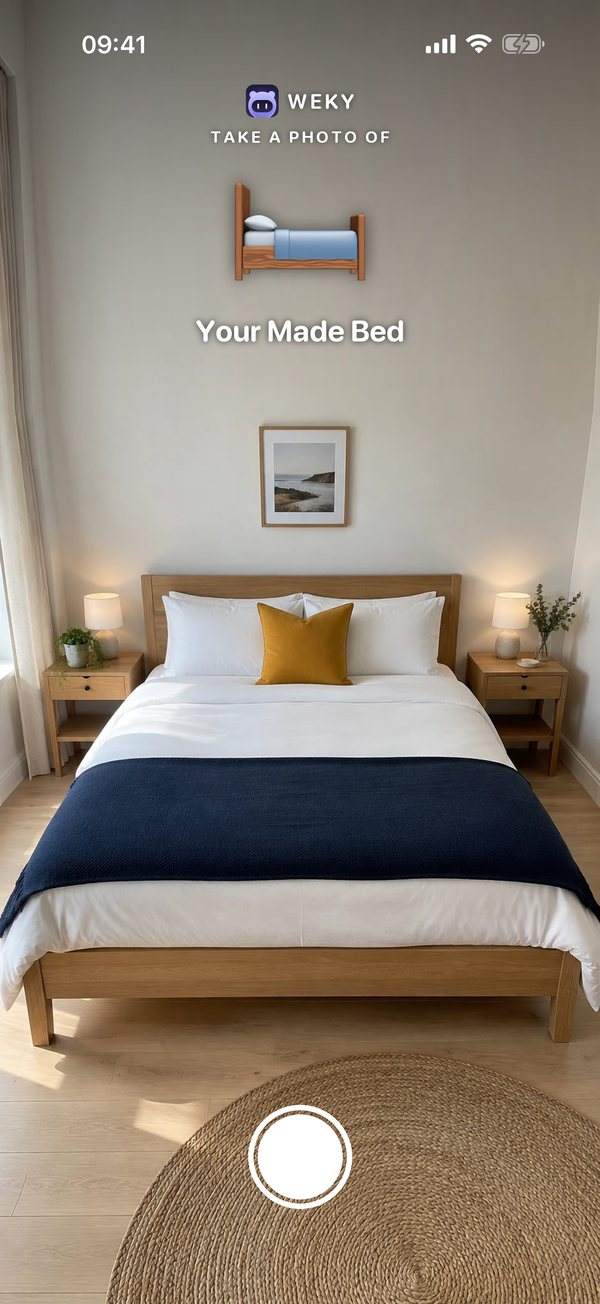
The biggest risk to early mornings isn't the alarm failing — it's you turning it off and going back to sleep. In the first minutes after waking, sleep inertia makes your judgment terrible. An alarm that only stops after a task — solving math problems, scanning a barcode in the bathroom, a photo of your made bed, a few push-ups — takes that decision away.


7. Plan a morning routine worth getting out of bed for
Early mornings stick when they're for something: a workout, an hour of study, coffee in silence, a side project. Decide the night before what the first 30 minutes are for, so you don't wake into an empty hour and decide to stay in bed.
8. Move your body early
A morning walk, a quick workout or even ten squats raise your heart rate and help you feel less groggy. Daytime activity also helps you fall asleep earlier at night.
9. Track your early wake-ups, and give it time
New habits take time — in one well-known study, it took a median of 66 days for a daily behaviour to feel automatic, with a wide range between people. Keep a simple streak of early mornings; seeing ten in a row makes the eleventh easier.
How Weky helps you wake up early
We built Weky for the part of the plan that willpower can't cover: the first minute after the alarm.
- No snooze button. The only way to stop the alarm is to finish a wake-up mission.
- Ten missions, including math, typing, push-ups, squats, a barcode scan, and photos of the sky or your made bed. Stack several on one alarm.
- A wake-up check rings again about ten minutes later, so going back to sleep doesn't work.
- Strict streaks. Every early morning adds a day; miss one and it resets to zero.
- Morning history shows which weekday you lose most often, so you know where the plan breaks.
- Start My Day: a short checklist after the alarm — water, stretch, make your bed — so the early hour starts on purpose.
- App blocking from bedtime keeps the late-night scrolling from undoing the plan.
And it rings every time. Weky schedules a real system alarm, so it rings on the lock screen in Silent mode, Sleep, Work or any Focus — even after a force-quit or a restart — without running in the background or draining your battery.
How to wake up early without feeling sleepy or groggy
Expect the first 15–30 minutes to feel rough, even when everything else is right — you may feel groggy and want to go back to sleep. That morning grogginess is sleep inertia, and it happens to everyone. Here's how to wake up refreshed and feel alert in the morning:
- Get enough sleep. Better sleep health means easier to wake mornings; grogginess is far worse after short nights or if you wake up during the night. If you're tired every morning of the plan, go to bed earlier, not later.
- Light and movement first. Curtains open, a glass of water, a few minutes of movement — the best way to wake up in the morning without caffeine doing all the work.
- Don't judge the plan on day two. The first few early mornings usually feel worse before they feel better; by week three most people are able to wake up early with far less struggle to wake.
- Protect your sleep quality. A cool, dark room helps you wake up easily — even early in the morning.
- Check for a sleep problem. If you sleep seven to nine hours and still wake up exhausted, snore loudly, or feel sleepy all day, talk to a doctor — sleep apnea and other conditions make early mornings miserable.
How to wake up early without an alarm clock
Waking up without an alarm is possible, once your body clock is stable. After a few weeks of the same sleep and wake time, many people naturally wake a few minutes before the alarm — whether they want to wake up around 6 or wake up at 7. Can you wake up at 4 without one? Rarely at first. Keep the alarm anyway as a backup — especially before a flight, an exam or a job interview. If you sleep through alarms entirely, start with why you sleep through your alarm, and if snoozing is your weak spot, read how to stop hitting snooze.
This article is general information, not medical advice.
Frequently asked questions
How can I wake up early without feeling tired?
Move your wake time earlier gradually (about 15 minutes every few days), go to bed earlier so you still get seven or more hours of sleep, get bright light within an hour of waking, and keep the same wake time at weekends. Grogginess in the first 15–30 minutes is normal sleep inertia; light and movement shorten it.
How can I train myself to wake up early?
Shift your alarm 15 minutes earlier every three or four days, keep that time seven days a week, and use morning light to pull your body clock earlier. In a 2019 trial, night owls who followed a three-week routine of earlier sleep and wake times, morning light, fixed meals and no late caffeine moved their sleep about two hours earlier.
What bedtime should I choose to wake up early?
Count back at least seven and a half to eight hours from your wake time to give yourself seven hours of actual sleep. To wake at 6:00, aim to be in bed by about 10:00–10:30.
Why is it so hard to wake up early?
Usually because your body clock runs later than your alarm, you're short on sleep, or both. Late-evening light and screens push your clock later; dim mornings fail to pull it back. Sleeping in at weekends resets the progress you made during the week.
What is the 3-2-1 rule before bed?
A popular shorthand: no food 3 hours before bed, no work 2 hours before, and no screens 1 hour before. It isn't a clinical guideline, but it lines up with the advice to keep the last hour before bed calm and screen-free.
What is the 4 a.m. rule?
It's a productivity-culture idea that waking at 4 a.m. gives you quiet hours before the world wakes up. It only works if you also go to sleep early enough to get seven or more hours — otherwise it's just sleep deprivation with good marketing.
Can you wake up early without an alarm?
Yes, once your body clock is stable. People who keep the same sleep and wake times for a few weeks often start waking naturally a few minutes before the alarm. Keep the alarm as a backup, especially at first.
References
- Facer-Childs ER, Middleton B, Skene DJ, Bagshaw AP. Resetting the late timing of 'night owls' has a positive impact on mental health and performance. Sleep Medicine, 2019;60:236–247.
- Wright KP, McHill AW, Birks BR, et al. Entrainment of the human circadian clock to the natural light-dark cycle. Current Biology, 2013;23(16):1554–1558.
- Roenneberg T, Allebrandt KV, Merrow M, Vetter C. Social jetlag and obesity. Current Biology, 2012;22(10):939–943.
- Burgess HJ, Eastman CI. Early versus late bedtimes phase shift the human dim light melatonin rhythm despite a fixed morning lights on time. Neuroscience Letters, 2004;356(2):115–118.
- Hilditch CJ, McHill AW. Sleep inertia: current insights. Nature and Science of Sleep, 2019;11:155–165.
- Chang AM, Aeschbach D, Duffy JF, Czeisler CA. Evening use of light-emitting eReaders negatively affects sleep, circadian timing, and next-morning alertness. PNAS, 2015;112(4):1232–1237.
- Lally P, van Jaarsveld CHM, Potts HWW, Wardle J. How are habits formed: modelling habit formation in the real world. European Journal of Social Psychology, 2010;40(6):998–1009.
- Centers for Disease Control and Prevention. About Sleep.