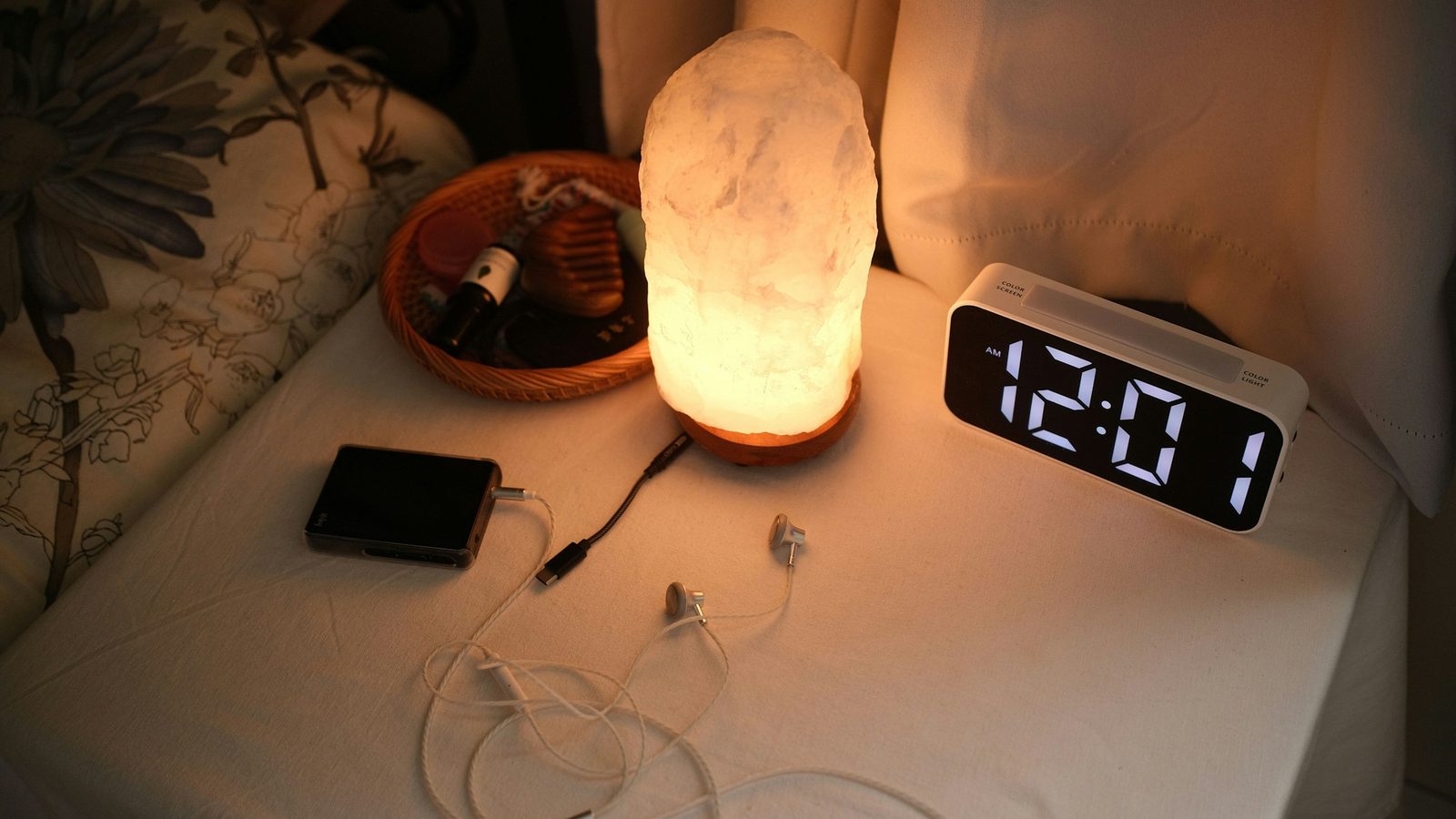
To fix your sleep schedule, anchor your wake time first: get up at the same time every day, weekends included, and get bright light within an hour of waking. Then move your bedtime earlier gradually — about 15–30 minutes every few days — dim the lights and screens in the last hour before bed, and avoid long naps and late caffeine. Most people reset in one to two weeks. Don't pull an all-nighter; it usually makes things worse.
A sleep schedule doesn't break in one night. It drifts: a few late nights, a lie-in to "catch up", another late night because you're not tired. Each step pushes your body clock later, until your natural bedtime is 3 a.m., you have trouble falling asleep, and the alarm feels like an assault after sleepless nights. The good news is that the same mechanism works in reverse.
Key takeaways
- The wake time is the lever. You can't force sleep, but you can control when you get up.
- Light sets the clock. Morning light pulls it earlier; evening light pushes it later.
- Go gradually. 15–30 minutes every few days is sustainable; big jumps feel like jet lag.
- Skip the all-nighter. It trades one bad night for several.
- Regularity matters as much as duration — consistent sleep times predict health better than hours alone.
Why your sleep pattern drifts: circadian rhythm and body clock
Your sleep is controlled by two systems. Your natural circadian rhythm — your internal clock — times when you feel sleepy and alert, and regulates hormones like melatonin. It's set mostly by light exposure. Your sleep pressure builds the longer you're awake and drains while you sleep.
A ruined sleep schedule is usually both systems out of place. Late-evening light from screens and lamps delays your body clock; in one study, reading on a light-emitting device before bed delayed melatonin and made people less alert the next morning. Sleeping in drains sleep pressure, so you're not tired at night. And without morning light, nothing pulls the clock back. Researchers call the weekday–weekend version social jet lag: like flying a few time zones every weekend.
Tips to fix your sleep schedule, step by step
Learn how to fix it in the right order: the morning first, then the evening. Each step supports a healthy sleep schedule and better sleep quality.
Step 1: Choose your wake time — and keep the same time every day
Pick the time you need to get up on workdays and use it seven days a week. This is the anchor everything else hangs from. If your current wake time is far from your goal, start 30–60 minutes earlier than now and move toward the target over the next week or two.
Step 2: Get morning sunlight within an hour of waking
Go outside, open the curtains, or sit by a bright window for 10–30 minutes. Natural light is far brighter than indoor lighting, even when it's cloudy, and it's the strongest signal for resetting your body clock. In one study, a week of natural light only — no artificial light at night — shifted people's internal clocks about two hours earlier.

Step 3: Dim the evening
In the hour before bedtime, lower the lights, avoid bright screens and keep the room calm. Blue light filters help a little; putting the phone away helps more. If late-night scrolling is the reason you're up, see how to stop scrolling at night and revenge bedtime procrastination.
Step 4: Go to bed earlier, gradually
Go to bed 15–30 minutes earlier every two or three days, but only lie down when you feel sleepy. Research shows earlier bedtimes shift the body's melatonin rhythm earlier too. A three-week trial with night owls — earlier sleep and wake times, morning light, fixed meal times, no caffeine late in the day, and exercise — shifted their sleep about two hours earlier with no loss of sleep.
Step 5: Protect your sleep pressure
- No long naps while you reset. If you must, keep it to 20 minutes before mid-afternoon.
- Cut caffeine early. Caffeine taken even six hours before bed can cut sleep by more than an hour.
- Move throughout the day. Exercise, ideally earlier in the day, helps you fall asleep at night and improve your sleep.
Step 6: Fix the sleep environment and sleep routine
Cool, dark and quiet. Blackout curtains, a fan or earplugs, and a bed used for sleep — not for work or long scrolling sessions. Go to bed at the same time every night once the new schedule settles — establishing a consistent sleep routine is what makes it a habit.
A 14-day sleep schedule reset
| Days | Wake time | Bedtime (if sleepy) | Focus |
|---|---|---|---|
| 1–2 | 9:30 | 1:30 | Fixed wake time; light within 10 minutes |
| 3–4 | 9:00 | 1:00 | No naps; last coffee before 2 p.m. |
| 5–6 | 8:30 | 12:30 | Screens off an hour before bed |
| 7–8 | 8:00 | 12:00 | Same wake time at the weekend |
| 9–11 | 7:30 | 11:30 | Morning walk or workout |
| 12–14 | 7:00 | 11:00 | Hold it — this is your new schedule |
Adjust the times to your own starting point and target. If a step feels impossible, repeat it for a few more days before moving on.
Can you fix your sleep schedule by pulling an all-nighter?
It's the most popular shortcut, and it usually backfires. After a night without sleep you'll be badly impaired all day, likely to nap or crash early the next evening, and then wake at 3 a.m. or sleep until noon — right back where you started, a day poorer. A fixed wake time with gradual shifts reaches the same place without the lost day.
What is the 10-3-2-1-0 rule for sleep?
It's a popular evening checklist: no caffeine 10 hours before bed, no food or alcohol 3 hours before, no work 2 hours before, no screens 1 hour before, and 0 snooze presses in the morning. It isn't a clinical rule, but it covers the main things that delay sleep — and the "zero snooze" part is the one people forget. The similar 3-3-3 rule is simpler: no alcohol, food or screens in the 3 hours before bed.
Why the morning is where sleep schedules are won or lost
Every reset plan depends on the same moment: getting up at the new wake time when your body still wants to sleep. That's where most plans fail — one snooze becomes an hour, the wake time drifts, and the schedule slides back. Inconsistent sleep timing has a real cost to wellness and quality of life: in a study of over 60,000 people, sleep regularity predicted mortality risk even better than hours of sleep. To maintain a consistent sleep schedule, you have to win the mornings.
That's what Weky is for:
- No snooze button. The alarm only stops after a wake-up mission.
- Missions that get you up and into the light — photograph the sky, scan a barcode in another room, do a few push-ups.
- A wake-up check about ten minutes later catches you if you go back to bed.
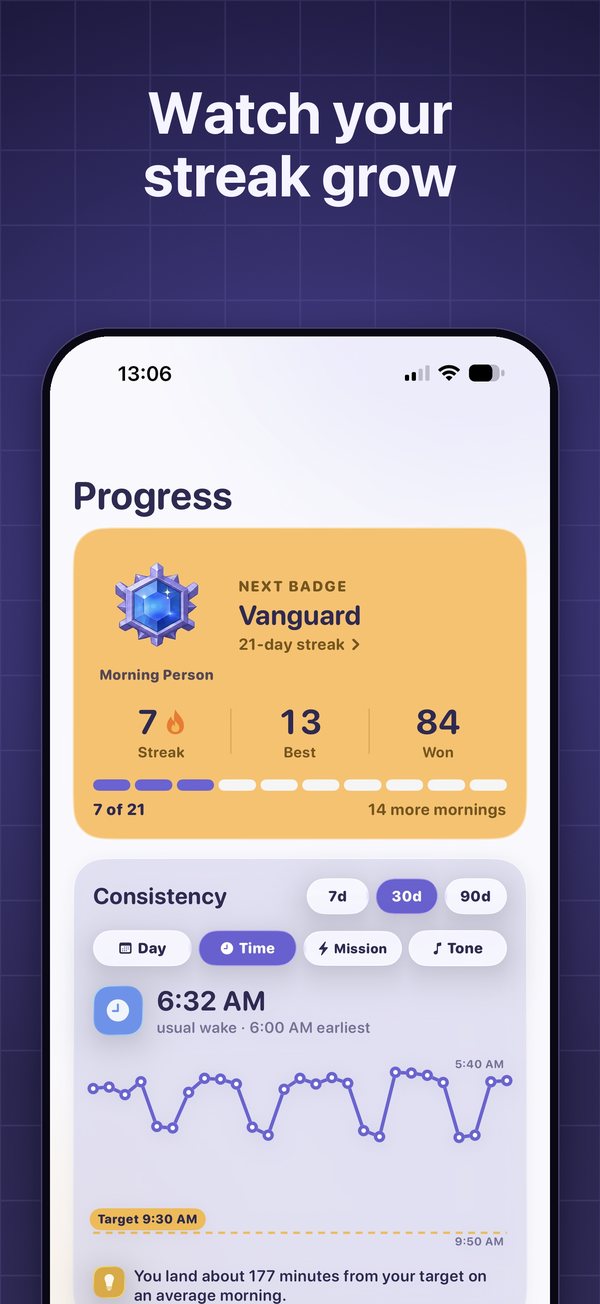
- Strict streaks and morning history, so you can see the new schedule holding — and which weekday you slip on.
- App blocking from bedtime so the old late nights don't creep back.

And it rings every time. Weky schedules a real system alarm, so it rings on the lock screen in Silent mode, Sleep, Work or any Focus — even after a force-quit or a restart — without running in the background or draining your battery.
When to see a doctor
Sleep deprivation from a slipped schedule is common and usually fixable. If you've kept a fixed wake time and morning light for several weeks and still can't fall asleep before the early hours, you may have delayed sleep phase disorder, a circadian rhythm sleep disorder with specific treatments. See a doctor too if you have insomnia, loud snoring, or daytime sleepiness despite enough sleep. For general sleep habits, see how to sleep better at night, and to shift earlier step by step, how to wake up early.
This article is general information, not medical advice.
Frequently asked questions
How do you fix a ruined sleep schedule?
Pick a fixed wake time and keep it every day, get bright light within an hour of waking, avoid bright light and screens in the late evening, and move your bedtime earlier gradually. Avoid long naps and caffeine after early afternoon while you reset.
How long does it take to fix a sleep schedule?
Usually one to two weeks of consistency, longer if you're shifting by several hours. Moving about 15–30 minutes earlier every few days is realistic; one study shifted night owls about two hours in three weeks.
Can I fix my sleep schedule by pulling an all-nighter?
It's not a good idea. You'll be so sleep-deprived that you may crash early the next evening, then wake in the middle of the night or sleep in, and you'll spend a day impaired. A fixed wake time with gradual shifts works better and is safer.
What is the fastest way to reset your sleep schedule?
The fastest safe approach is to wake at your target time every day from tomorrow, get bright outdoor light immediately, skip naps, and go to bed only when sleepy. The first few nights are hard, but sleep pressure builds quickly.
What is the 10-3-2-1-0 rule for sleep?
A popular shorthand: no caffeine 10 hours before bed, no food or alcohol 3 hours before, no work 2 hours before, no screens 1 hour before, and zero snooze presses in the morning. It isn't a clinical guideline, but it's a useful structure.
What is the 3-3-3 rule for sleep?
A popular shorthand for no alcohol, no food and no screens or work in the 3 hours before bed. It isn't an official guideline; the screen part matches the evidence that late screens delay sleep.
When should I see a doctor about my sleep schedule?
If you can't shift your schedule despite weeks of consistent effort, if it's affecting work or school, or if you also have loud snoring, insomnia or daytime sleepiness. A delayed sleep phase can be a circadian rhythm disorder with specific treatments.
References
- Facer-Childs ER, Middleton B, Skene DJ, Bagshaw AP. Resetting the late timing of 'night owls' has a positive impact on mental health and performance. Sleep Medicine, 2019;60:236–247.
- Wright KP, McHill AW, Birks BR, et al. Entrainment of the human circadian clock to the natural light-dark cycle. Current Biology, 2013;23(16):1554–1558.
- Burgess HJ, Eastman CI. Early versus late bedtimes phase shift the human dim light melatonin rhythm despite a fixed morning lights on time. Neuroscience Letters, 2004;356(2):115–118.
- Chang AM, Aeschbach D, Duffy JF, Czeisler CA. Evening use of light-emitting eReaders negatively affects sleep, circadian timing, and next-morning alertness. PNAS, 2015;112(4):1232–1237.
- Roenneberg T, Allebrandt KV, Merrow M, Vetter C. Social jetlag and obesity. Current Biology, 2012;22(10):939–943.
- Windred DP, Burns AC, Lane JM, et al. Sleep regularity is a stronger predictor of mortality risk than sleep duration. Sleep, 2024;47(1):zsad253.
- Drake C, Roehrs T, Shambroom J, Roth T. Caffeine effects on sleep taken 0, 3, or 6 hours before going to bed. Journal of Clinical Sleep Medicine, 2013;9(11):1195–1200.