The 10-3-2-1-0 rule is a bedtime countdown: no caffeine 10 hours before bed, no food or alcohol 3 hours before, no work 2 hours before, no screens 1 hour before, and 0 times hitting snooze in the morning. The "10-5-3-2-1" version people often search for is the same idea, usually with alcohol given its own cutoff 5 hours before bed. The numbers are a rule of thumb, but every habit behind them is supported by sleep research.
The appeal is obvious: you don't need an app, a tracker or a supplement, just five cutoffs you can count on one hand. The catch is that two of them, the screens and the snooze button, are exactly the ones most people break first.
Key takeaways
- 10 hours: last caffeine. Coffee taken 6 hours before bed can still cost you an hour of sleep.
- 3 hours: last big meal and last alcohol. Alcohol breaks up the second half of the night.
- 2 hours: work off. Writing tomorrow's to-do list helps your brain let go.
- 1 hour: screens off, or at least the feeds that keep you up.
- 0: no snooze. Get up at the first alarm and keep the same wake time every day.
What is the 10-3-2-1-0 rule?
Count backward from your bedtime. Each number marks the moment one sleep-disrupting habit stops for the day:
| Number | When | Stop | Why |
|---|---|---|---|
| 10 | 10 hours before bed | Caffeine: coffee, tea, energy drinks, cola | Caffeine stays active for hours and delays and lightens sleep |
| 3 | 3 hours before bed | Big meals and alcohol | Digestion and alcohol fragment sleep |
| 2 | 2 hours before bed | Work, emails, hard decisions | A busy mind takes longer to switch off |
| 1 | 1 hour before bed | Phones, tablets, laptops, TV | Bright screens and endless content push sleep later |
| 0 | In the morning | The snooze button | Get up at the first alarm, at the same time every day |
What is the 10-5-3-2-1 rule for sleep?
It's the same countdown under a different label. Most sources write it as 10-3-2-1-0. Versions that include a 5 usually split alcohol off from food: no alcohol 5 hours before bed, then no food 3 hours before. That's a sensible tweak, because alcohol keeps affecting sleep for hours after the last drink. Some versions drop the 0; we'd keep it, because it's the one that protects your morning.
Where did the rule come from?
Not from a sleep lab. The countdown was popularized by fitness and productivity coach Craig Ballantyne, then spread widely on social media, including by doctors who shared it as an easy sleep-hygiene checklist. So treat the exact numbers as a memory aid. The habits behind them, though, are well studied.
Each step, and what the research says
10 hours before bed: no more caffeine
Caffeine blocks adenosine, the chemical that builds up sleep pressure during the day, and your body clears it slowly. In a lab study, caffeine taken 0, 3 or even 6 hours before bed all disrupted sleep; the 6-hour dose still cut total sleep by more than an hour. A 10-hour buffer covers slow metabolizers and that large afternoon coffee. If you go to bed at 11 p.m., your last coffee is around 1 p.m.
3 hours before bed: no big meals or alcohol
A heavy dinner close to bedtime can mean reflux and a restless first part of the night. Alcohol is trickier: it helps you fall asleep faster, which is why it feels like a sleep aid, but it disrupts the second half of the night with more awakenings and less REM sleep. If you drink, the 5-hour version of the rule is the safer one. A light snack is fine if you're genuinely hungry; going to bed starving doesn't help either.
2 hours before bed: stop working
Work keeps your brain in problem-solving mode, and an alert brain takes longer to fall asleep. Close the laptop, and do one small thing on the way out: write down tomorrow's to-do list. In a study with sleep monitoring, people who spent five minutes writing a to-do list before bed fell asleep faster than people who wrote about what they had already done.
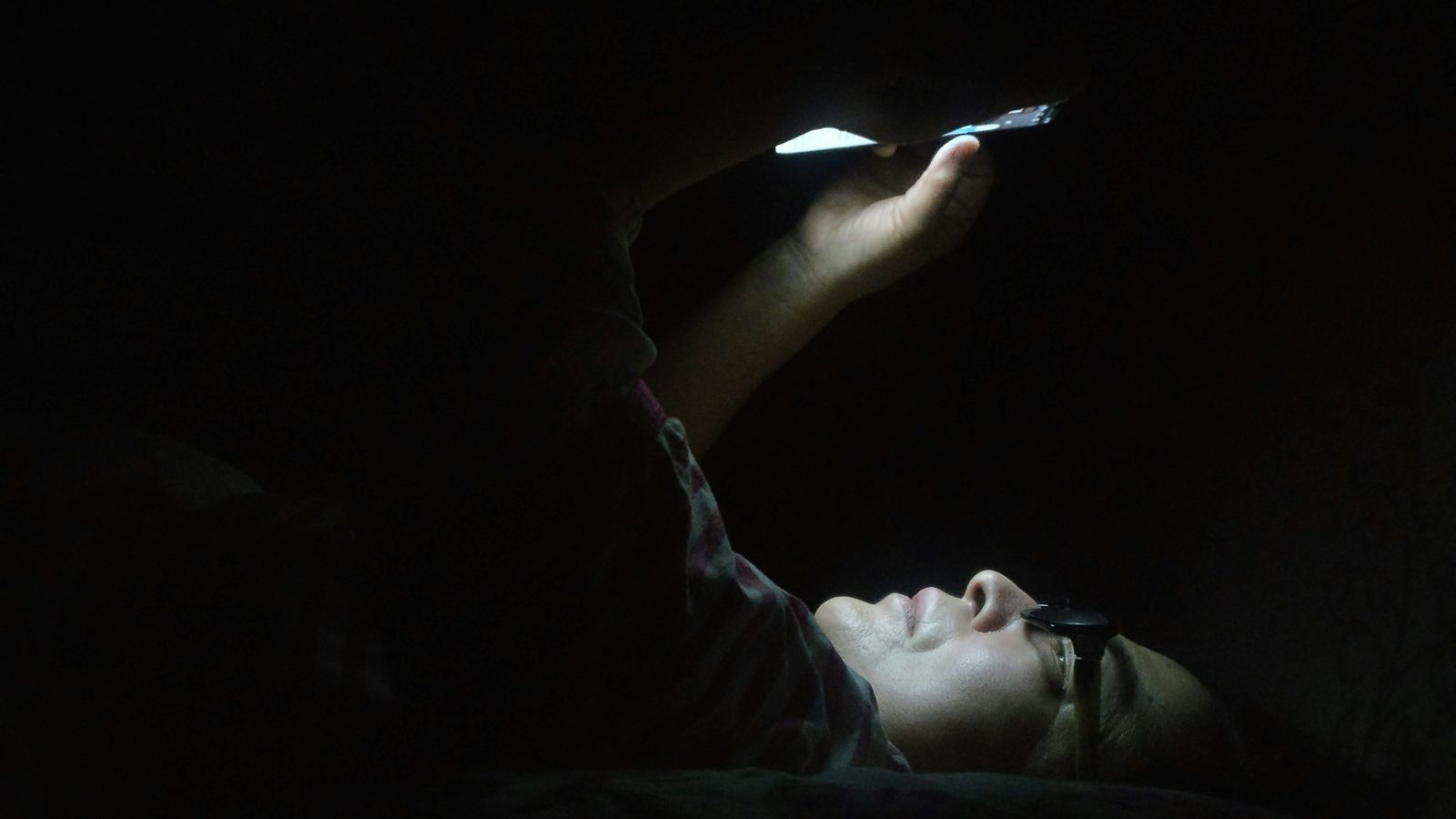
1 hour before bed: screens off
Screens hurt sleep in two ways. The bright light at night delays your body clock; in one study, reading on a light-emitting e-reader before bed delayed melatonin, made it take longer to fall asleep and left people less alert the next morning than reading a printed book. And the content itself (feeds, videos, messages) is built to keep you going "just one more". For most people the second problem is the bigger one, so the apps matter more than the brightness setting. More on this in how to stop scrolling at night.
0: zero snoozes in the morning
The last number protects the morning. The evidence on snoozing itself is more mixed than its reputation: one study found that 30 minutes of snoozing didn't hurt habitual snoozers' performance. But snoozing turns a single wake-up into several half wake-ups, makes your real wake time drift, and a drifting wake time undoes the work the other four numbers did. Getting up at the first alarm, at the same time every day, is what anchors your body clock. See how to stop hitting snooze.
Does the 10-3-2-1-0 rule actually work?
As a package, it hasn't been tested in a clinical trial. Each piece, though, targets something well known to harm sleep: late caffeine, alcohol and heavy late meals, a busy mind, evening screens and an irregular wake time. That's why the rule helps many people. It won't fix insomnia, sleep apnea or a body clock that's shifted by shift work, and the timings may need adjusting: someone very sensitive to caffeine may need more than 10 hours, while someone who goes to bed at 2 a.m. will have very different clock times.
Here's what the countdown looks like for three common bedtimes:
| Bedtime | Last caffeine (10) | Last meal / alcohol (3) | Work off (2) | Screens off (1) |
|---|---|---|---|---|
| 10:00 p.m. | 12:00 p.m. | 7:00 p.m. | 8:00 p.m. | 9:00 p.m. |
| 11:00 p.m. | 1:00 p.m. | 8:00 p.m. | 9:00 p.m. | 10:00 p.m. |
| 12:00 a.m. | 2:00 p.m. | 9:00 p.m. | 10:00 p.m. | 11:00 p.m. |
How to make the rule stick
- Pick a fixed bedtime first. Every number counts backward from it; without one, the rule has nothing to anchor to.
- Start with one number. For most people that's the 1 or the 0, because they change the night and the morning most.
- Make the cutoffs automatic. Set a reminder for your last coffee, and block the apps you lose the night to instead of relying on willpower at 11 p.m.
- Charge your phone away from the bed. It helps the 1, and it forces you to stand up for the 0.
- Keep the same wake time on weekends. If your schedule is already off, read how to fix your sleep schedule.
- Look at the result. Compare a few nights before and after; if you don't feel or see a difference after two weeks, adjust the timings.
How Weky handles the 1 and the 0
Caffeine, dinner and work are decisions you make during the day, when you're thinking clearly. The screen cutoff and the snooze button are decisions you make tired, and that's where the rule usually fails. Weky is built to take those two decisions off your hands:
- The 1: app blocking from bedtime. Each alarm can lock the apps you choose, from the bedtime you set until that alarm's morning mission is done. No midnight negotiating, and no feeds first thing in bed.
- The 0: no snooze button. The alarm stops only after a mission: push-ups, squats, math, typing, a photo of the sky or your made bed, and more.
- A wake-up check about 10 minutes later, in case you finished the mission and crawled back under the covers.
- Your sleep beside every morning. Weky shows your Apple Health sleep next to each morning, so you can see whether the countdown is really changing your nights.
- Strict streaks that reward getting up on time, day after day.
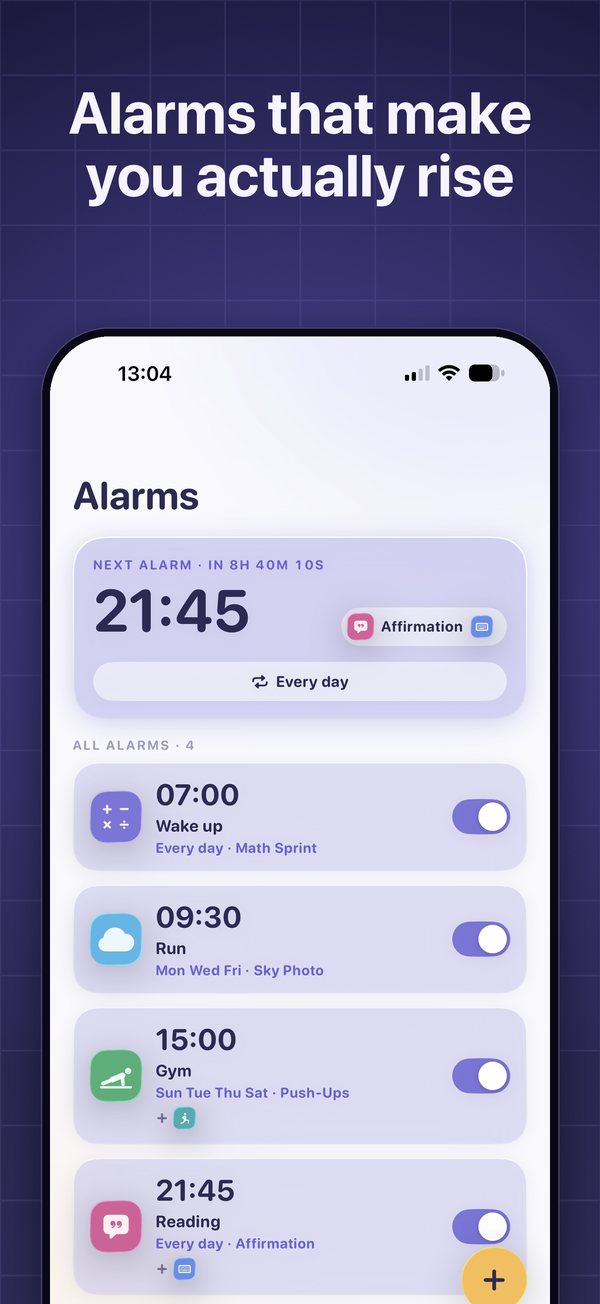
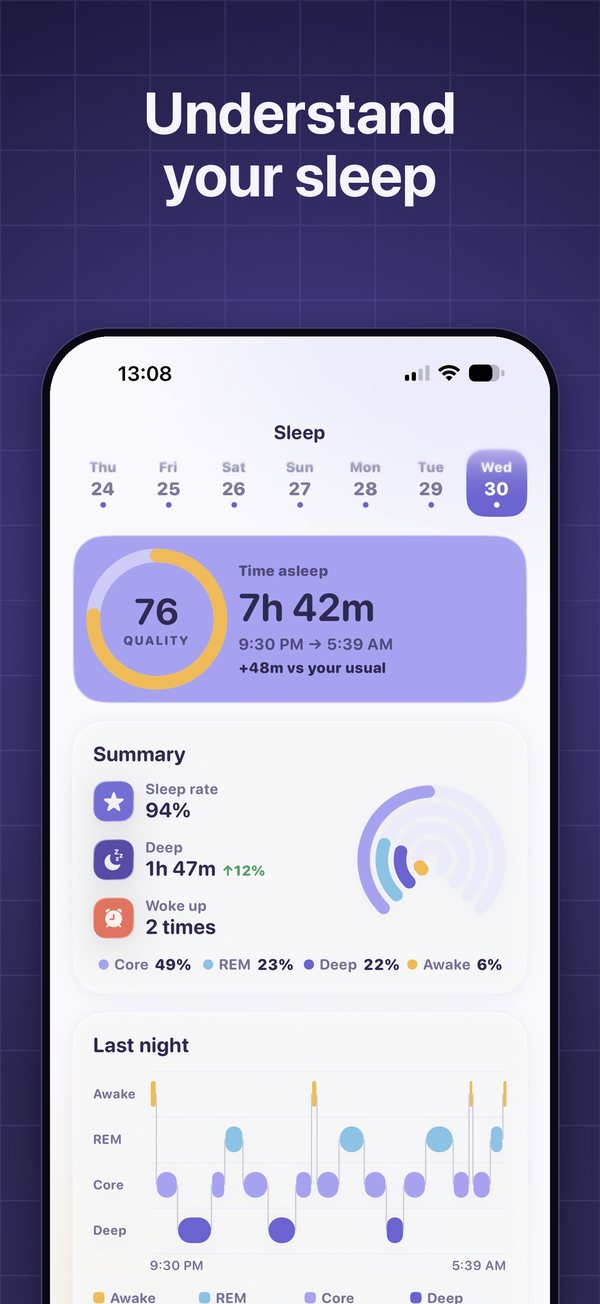
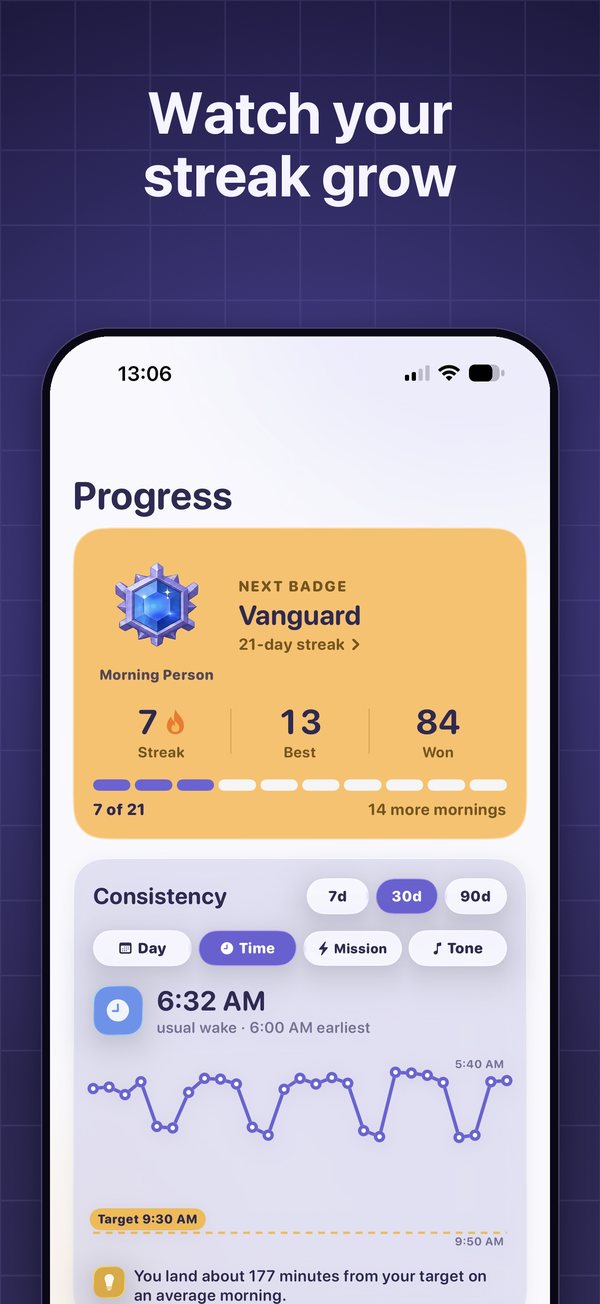
And it rings every time. Weky sets a real system alarm: it rings on the lock screen in Silent mode and in Sleep, Work or any Focus, even after you force-quit the app or restart your iPhone, with no background running and no battery drain.
Who should adapt the rule?
The countdown is general advice, not a treatment. Shift workers, new parents and anyone whose bedtime moves a lot will need their own timings. If you follow the rule and still lie awake for long periods, snore loudly, stop breathing at night or feel exhausted every day despite enough time in bed, talk to a doctor: insomnia and sleep apnea need proper treatment, and cognitive behavioral therapy for insomnia works better than any checklist.
This article is general information, not medical advice.
Frequently asked questions
What is the 10-5-3-2-1 rule for sleep?
It's a version of the 10-3-2-1-0 bedtime countdown. In the common version: no caffeine 10 hours before bed, no food or alcohol 3 hours before, no work 2 hours before, no screens 1 hour before, and zero snoozes in the morning. Versions with a 5 usually move alcohol to its own cutoff 5 hours before bed.
What does the 0 in 10-3-2-1-0 mean?
Zero times hitting snooze. When the alarm rings, you get up at the first ring instead of drifting back to sleep in short fragments.
Is the 10-3-2-1-0 rule backed by science?
Each habit is supported by research (late caffeine, alcohol, evening screens and bedtime worry all worsen sleep), but the exact numbers are a memorable rule of thumb, not a tested clinical protocol. Adjust them to your body.
Who created the 10-3-2-1-0 rule?
It didn't come from a sleep study. It was popularized by fitness and productivity coach Craig Ballantyne and later spread widely on social media, including by doctors sharing it as a simple sleep-hygiene checklist.
Why stop caffeine 10 hours before bed?
Caffeine lingers for hours. In a lab study, a dose taken even 6 hours before bed cut total sleep by more than an hour, so a 10-hour buffer leaves room for slow metabolizers and big afternoon coffees.
What if I go to bed at 11 p.m.?
Then it's: last coffee by 1 p.m., last meal or drink by 8 p.m., work off by 9 p.m., screens off by 10 p.m., and up at the first alarm.
References
- Drake C, Roehrs T, Shambroom J, Roth T. Caffeine effects on sleep taken 0, 3, or 6 hours before going to bed. Journal of Clinical Sleep Medicine, 2013;9(11):1195–1200.
- Ebrahim IO, Shapiro CM, Williams AJ, Fenwick PB. Alcohol and sleep I: effects on normal sleep. Alcoholism: Clinical and Experimental Research, 2013;37(4):539–549.
- Scullin MK, Krueger ML, Ballard HK, Pruett N, Bliwise DL. The effects of bedtime writing on difficulty falling asleep: a polysomnographic study comparing to-do lists and completed activity lists. Journal of Experimental Psychology: General, 2018;147(1):139–146.
- Chang AM, Aeschbach D, Duffy JF, Czeisler CA. Evening use of light-emitting eReaders negatively affects sleep, circadian timing, and next-morning alertness. PNAS, 2015;112(4):1232–1237.
- Sundelin T, Landry S, Axelsson J. Is snoozing losing? Why intermittent morning alarms are used and how they affect sleep, cognition, cortisol, and mood. Journal of Sleep Research, 2024;33(3):e14054.