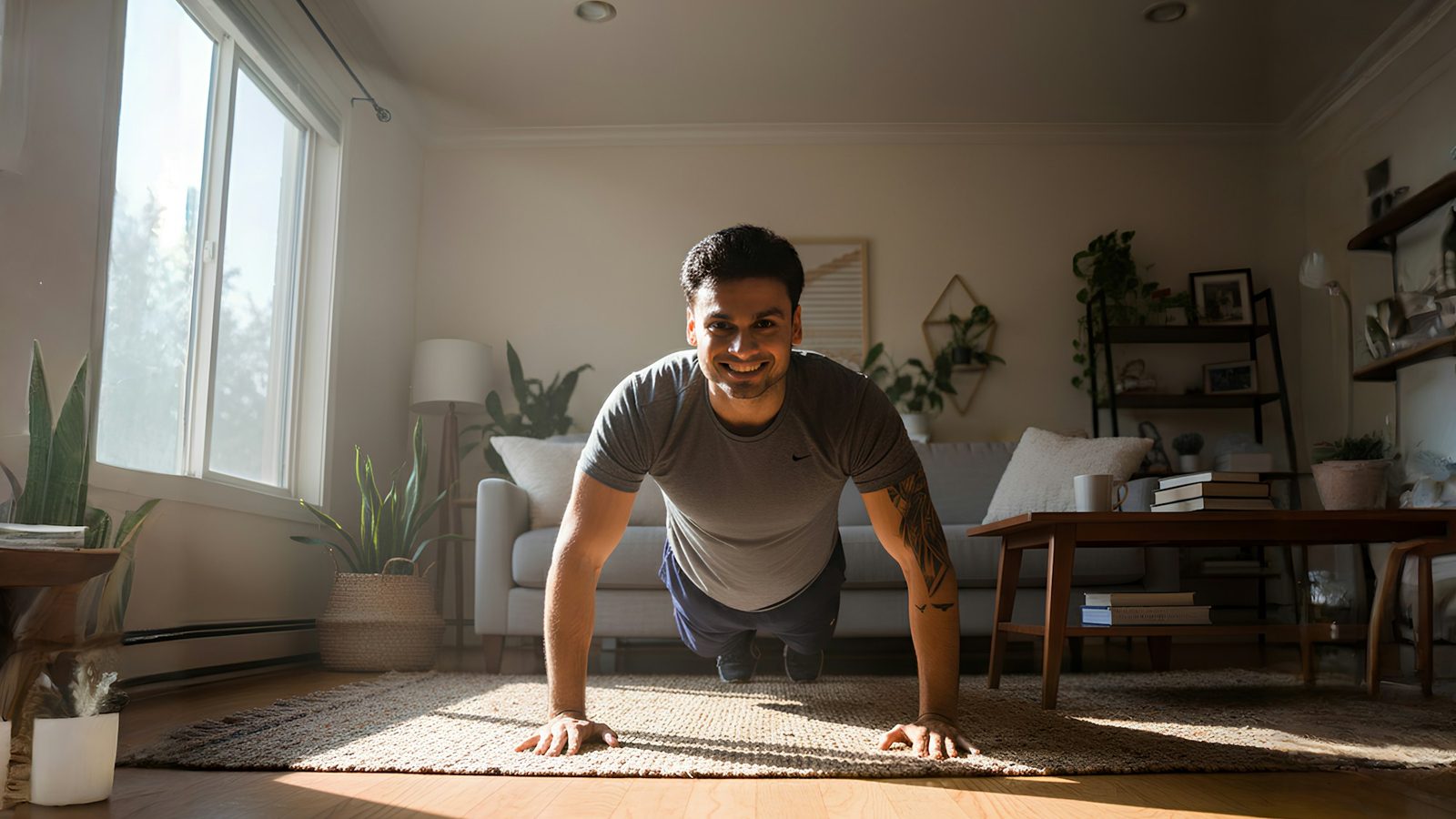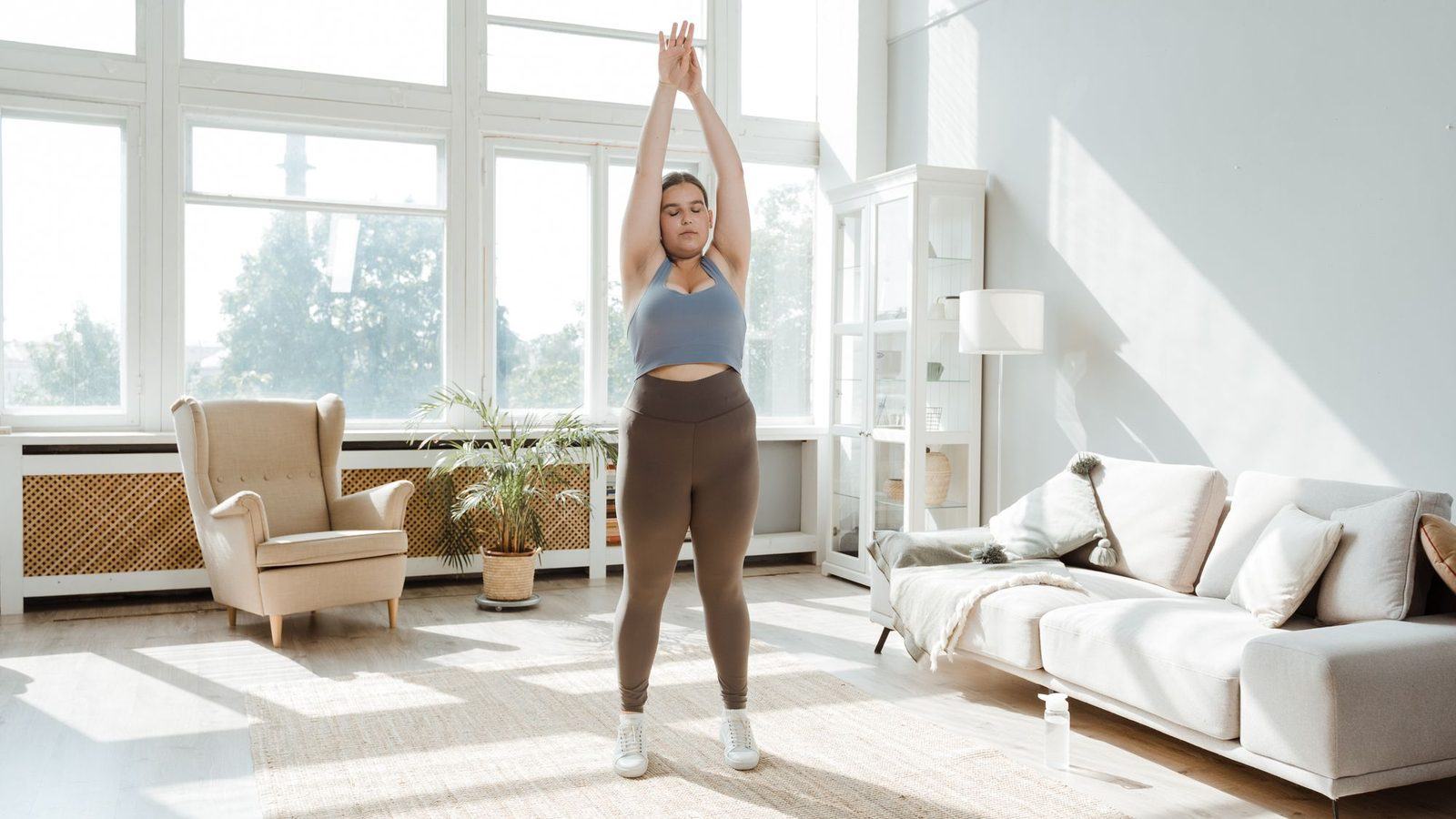
To work out in the morning, move your bedtime earlier first, prepare everything the night before, and make the first minutes after the alarm automatic: get up, drink water, put on your workout clothes and start with a short warm-up. Keep the same time every day and start small. After a few weeks of repetition, the morning workout stops being a decision and becomes a habit.
Why work out in the morning?
The honest answer: not because it burns more or builds more. It's because it's the time of day that is easiest to protect.
- Fewer things get in the way. Late meetings, dinners, tiredness and "I'll do it tomorrow" pile up as the day goes on. At 6:30 a.m. nobody needs you yet.
- It's more consistent. Researchers who followed people with obesity found that those who exercised mostly in the morning tended to be more consistent, and they suggested that a stable morning time makes the habit easier to automate.
- It's done. Whatever happens later, the most important thing for your body already happened. Many people say this is the biggest win: no workout hanging over the day.
- It can help you sleep. Regular exercise is linked to better sleep, and better sleep makes it easier to keep exercising: the two support each other.
To be fair, strength, power and flexibility tend to peak in the late afternoon for many people, because body temperature is higher. If you're training for a personal record, that matters. For almost everyone else, the best time to work out is the time you'll actually keep, and for busy people that's usually the morning.
Why morning workouts are so hard to start
Most morning workouts fail before they begin, in bed. The usual reasons:
- Too little sleep. Setting the alarm an hour earlier without going to bed an hour earlier just creates sleep debt. Your body will fight back, and it usually wins.
- The snooze button. Every snooze is a new negotiation with yourself, and at 6 a.m. the warm bed always has the better argument.
- Grogginess. In the first minutes after waking, your brain is still partly asleep. That's the worst moment to decide whether to train.
- Too many decisions. What to wear, what workout, where are the headphones? Each question is a chance to quit.
- The phone. "Just a quick check" in bed turns into twenty minutes, and the time for the workout is gone.
Notice that none of these is about fitness. The workout itself is rarely the problem; the first five minutes are.
How to work out in the morning: 10 tips
1. Move your bedtime, not just your alarm
Most adults need 7 to 9 hours of sleep. If you want to train at 6:30, count back: you probably need to be asleep around 10:30 or 11. Shift bedtime 15–30 minutes earlier every few days instead of all at once.
2. Prepare everything the night before
Lay out your clothes and shoes, fill your water bottle, pack your gym bag and charge your headphones. Some people even sleep in their workout clothes. The goal is that in the morning there's nothing left to decide.
3. Decide exactly what you'll do
"Work out tomorrow" is a wish. "At 6:30 I'll do 20 minutes: warm-up, three rounds of squats, push-ups and lunges, then stretching" is a plan. Research on if-then plans shows that deciding when, where and what in advance makes people far more likely to follow through.
4. Start small
For the first two weeks, aim for 10 to 20 minutes. A short workout you never miss beats an ambitious one you skip. You can make it longer once getting up is automatic.
5. Get out of bed the moment the alarm rings
No snooze, no checking the phone. Put your feet on the floor, stand up and go to the bathroom or kitchen. Leaving the bedroom is the real start of your workout.
6. Water and light first
Drink a glass of water and open the curtains or step outside. Morning light helps wake your body clock, and after a night without drinking a little water makes the first minutes easier.
7. Warm up longer than you would in the evening
Muscles and joints are stiffer in the morning and your body temperature is lower. Spend 5 to 10 minutes on easy movement, such as marching, arm circles, bodyweight squats and a few slow push-ups, before anything heavy or fast.
8. Eat light, or not at all, depending on the session
For a short or easy session, many people feel fine with only water. For a long or hard one, try a small snack 30–60 minutes before, like a banana or yoghurt. There's no single right answer; test what works for you.
9. Same time, same place, every day
Habits form fastest when the cue is stable. In a study of new gym members, people who trained at least four times a week built an exercise habit in about six weeks. Keep your workout at the same time, even on days when it's only 10 minutes.
10. Track a streak and never miss twice
Mark every morning you train. Seeing the chain grow is motivating, and one missed day doesn't ruin a habit. The rule that matters: never miss two days in a row.

Make the alarm the start of your workout: how Weky helps
Every tip above depends on one moment: whether you get up when the alarm rings. That's what Weky is built for. Weky is an iPhone alarm that only stops when you complete a wake-up mission, and it can turn your workout into a habit with its own alarm and streak.
- A habit with its own alarm. In the alarm editor, switch on Track as a habit and choose Gym, Running, Walk, Swim, Cycling, Stretching or your own. Each habit gets its own colour, 90-day calendar and separate streak, so a missed gym morning never breaks your wake-up streak.
- A mission that is your warm-up. Set push-ups or squats as the mission, by reps or by time. The alarm keeps ringing until you've done them, so by the time it stops, you're already moving. Add a second mission, like scanning the barcode of your protein bar in the kitchen, to get you out of the bedroom too.
- No snooze. Weky has no snooze button, so there's no 6 a.m. negotiation. Turn on the wake-up check and Weky asks you again a few minutes later, so you can't go back to bed after the mission.
- Phone locked until you're up. With App blocking, the apps you scroll in bed stay locked from bedtime until your mission is done, so the time for your workout doesn't disappear into a feed.
- Bedtime you can trust. The Sleep tab shows Bedtime tonight, counted back from your next alarm, so moving your workout earlier also moves your night earlier.
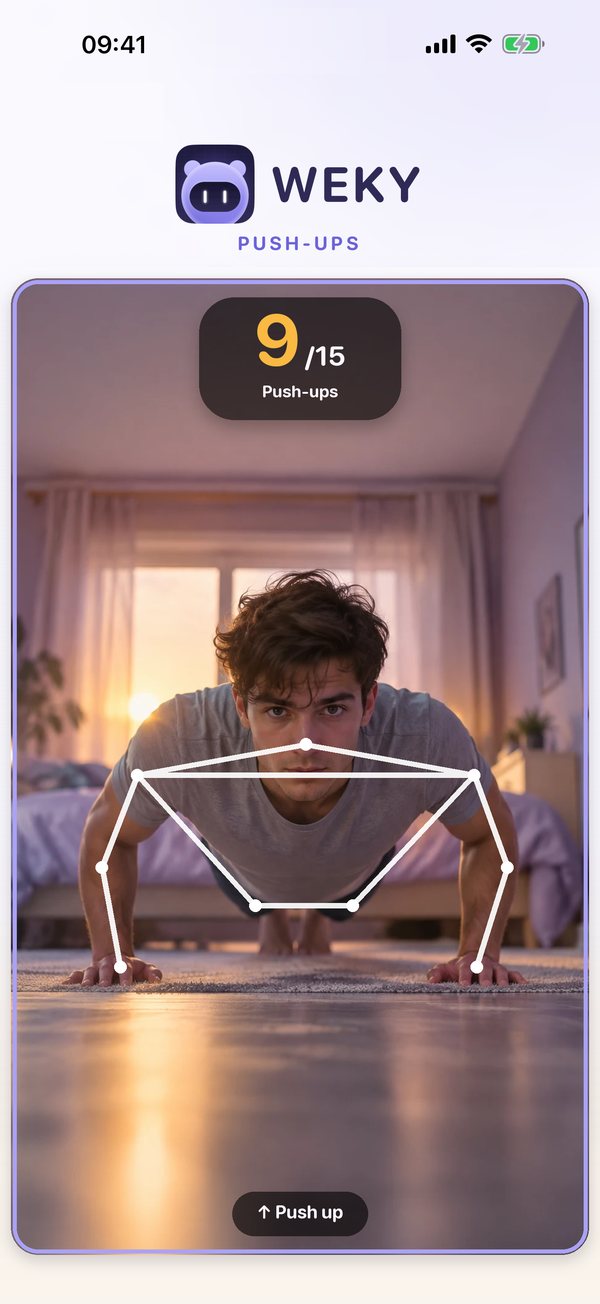
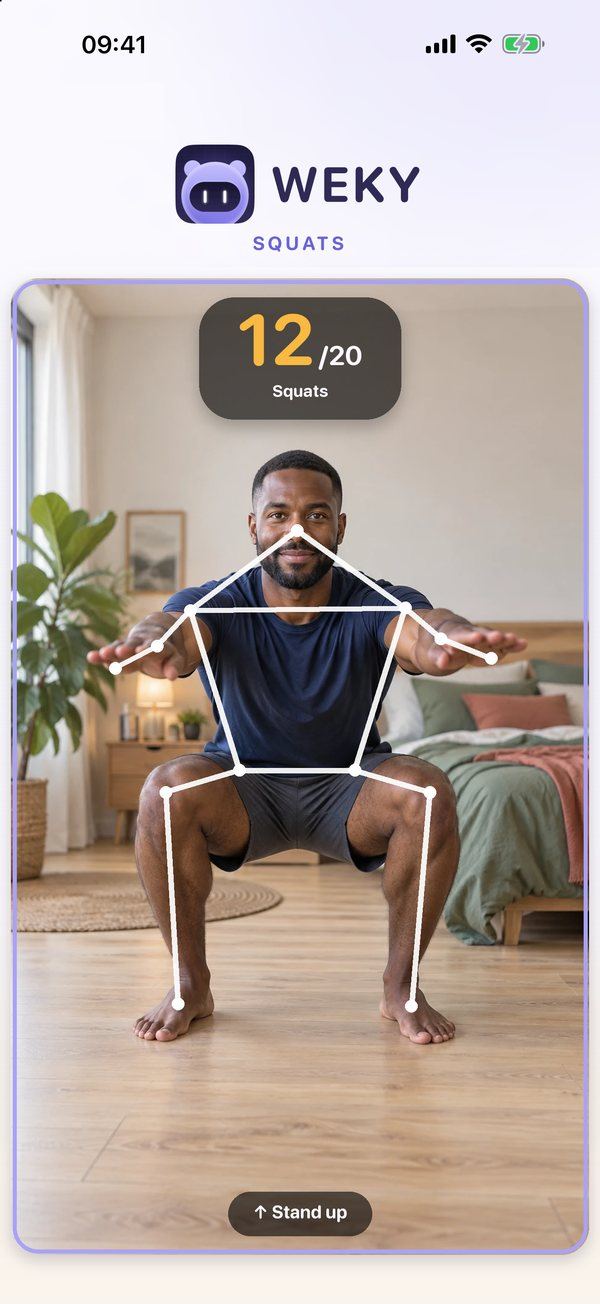
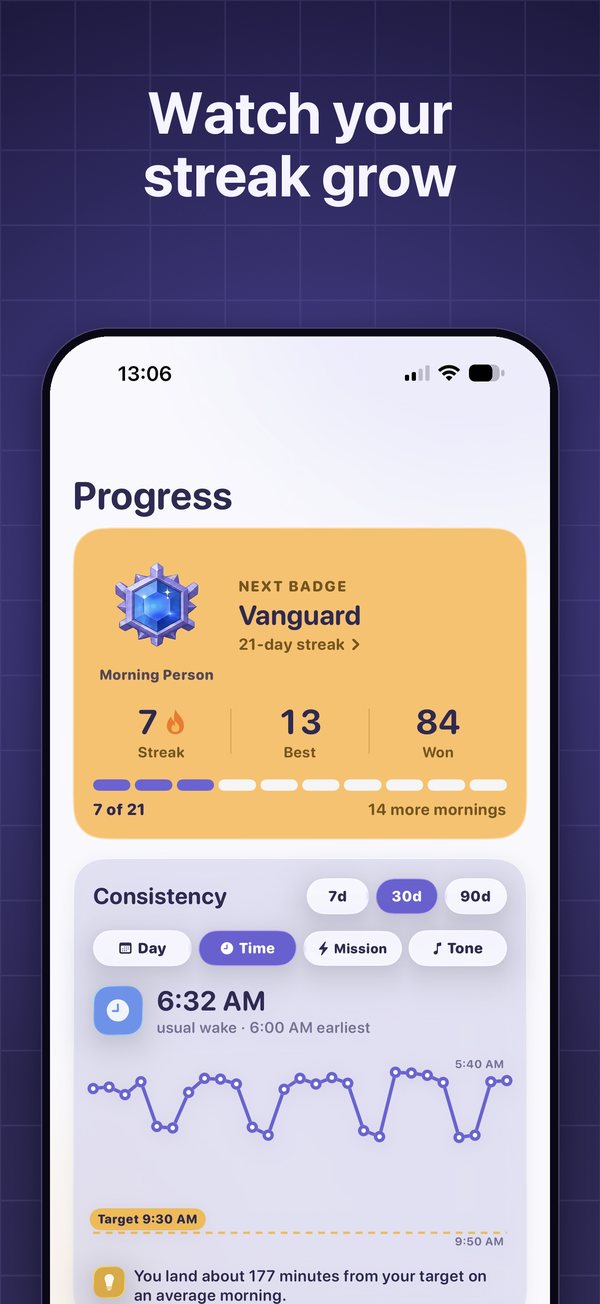
You decide once, in the evening. In the morning, the alarm, the mission and the streak carry you from bed to your first set.
A 2-week plan to start
- Days 1–3: Move bedtime 15–30 minutes earlier. Set your alarm and do a 10-minute session: warm-up plus one easy round.
- Days 4–7: Keep the same wake time. Prepare everything the night before and go up to 15 minutes.
- Week 2: 20 minutes, four or more days. Same time, same place. If you miss a day, train the next morning, even if only for 10 minutes.
The first week is the hardest; by the second, getting up is already easier. Give it about six weeks of consistency and the morning workout starts to feel like part of who you are, not something you have to talk yourself into.
Weky is free to download; Weky Pro is available monthly, yearly (with a 7-day free trial) or lifetime.
To shift your whole schedule earlier, read how to wake up early. To understand why the first weeks matter so much, see how long it takes to form a habit, and for a mission that gets you moving, the push-up alarm app.
Frequently asked questions
Is it better to work out in the morning or at night?
The best time is the one you can keep. Strength and power tend to peak later in the day for many people, but morning exercisers are often more consistent because fewer things get in the way. If you keep skipping evening sessions, the morning is worth trying.
Should I eat before a morning workout?
For a short or easy session, many people train fine on an empty stomach with some water. For a long or hard workout, a small snack such as a banana or yoghurt 30–60 minutes before usually helps. Try both and see how you feel.
How do I motivate myself to work out in the morning?
Remove decisions: sleep enough, lay out your clothes the night before, plan the exact workout, set one alarm you can't snooze, and track a streak. Motivation follows action; once you're moving, it gets much easier.
How long does it take to make morning workouts a habit?
In a study of new gym members, people who trained at least four times a week built an exercise habit in about six weeks. Most habits take longer, around two months on average. Doing it at the same time every day speeds it up.
Is it OK to work out right after waking up?
Yes, but give your body a longer warm-up: your muscles are stiffer and your body temperature is lower in the morning. Drink water, then spend 5–10 minutes on easy movement before anything heavy or fast.
How much sleep do I need if I work out in the morning?
Most adults need 7–9 hours. An early workout only works if bedtime moves earlier too; cutting sleep to train usually backfires in performance, mood and recovery.
References
- Kaushal N, Rhodes RE. Exercise habit formation in new gym members: a longitudinal study. Journal of Behavioral Medicine, 2015;38(4):652–663.
- Schumacher LM, Thomas JG, Raynor HA, et al. Consistent Morning Exercise May Be Beneficial for Individuals With Obesity. Exercise and Sport Sciences Reviews, 2020;48(4):201–208.
- Drust B, Waterhouse J, Atkinson G, Edwards B, Reilly T. Circadian rhythms in sports performance — an update. Chronobiology International, 2005;22(1):21–44.
- Kline CE. The bidirectional relationship between exercise and sleep: implications for exercise adherence and sleep improvement. American Journal of Lifestyle Medicine, 2014;8(6):375–379.
- Gollwitzer PM, Sheeran P. Implementation intentions and goal achievement: a meta-analysis of effects and processes. Advances in Experimental Social Psychology, 2006;38:69–119.
- Hirshkowitz M, Whiton K, Albert SM, et al. National Sleep Foundation's sleep time duration recommendations: methodology and results summary. Sleep Health, 2015;1(1):40–43.