To stop oversleeping, get enough sleep at a consistent time (seven or more hours, same wake time every day), get daylight as soon as you wake, cut alcohol and late caffeine, and use one alarm you can't switch off half-asleep — with no snooze and a second check a few minutes later. If you regularly sleep more than nine or ten hours and still feel exhausted, talk to a doctor.
"Oversleeping" covers two different problems. One is sleeping through the time you meant to get up — the alarm went off, and you didn't. The other is genuinely sleeping too long, night after night. The fixes overlap, but it helps to know which one is yours.
Key takeaways
- Most oversleeping is sleep debt. Short weeknights lead to long mornings.
- A late body clock makes early alarms feel like the middle of the night.
- Easy-to-dismiss alarms let half-asleep you switch them off.
- Consistency fixes most of it: same wake time, morning light.
- Long sleep that never feels refreshing deserves a doctor's visit.
What causes oversleeping?
- Sleep debt. Adults need at least seven hours. Run short all week and your body collects at the weekend — or on Tuesday morning.
- An irregular schedule. Late weekends shift your body clock, so Monday's alarm rings in your biological night — researchers call it social jet lag.
- Sleep inertia. In the groggy minutes after waking you can switch off an alarm and not remember it.
- Alcohol and late screens. Both disrupt sleep quality, so you need more of it.
- Stress, illness, medication and low mood can all increase sleep.
- Sleep disorders such as sleep apnea or hypersomnia make sleep less restorative.
8 ways to stop oversleeping
1. Get enough sleep, consistently
Count back seven and a half to eight hours from your wake time and make that your bedtime. Better sleep at night means fewer long mornings.
2. Keep one wake time, seven days a week
It's the single most effective habit. If you must sleep in, cap it at an hour. See how to fix your sleep schedule.
3. Get light first thing
Open the curtains or step outside. Morning light tells your body clock the day has started.
4. Use one alarm you can't dismiss half-asleep
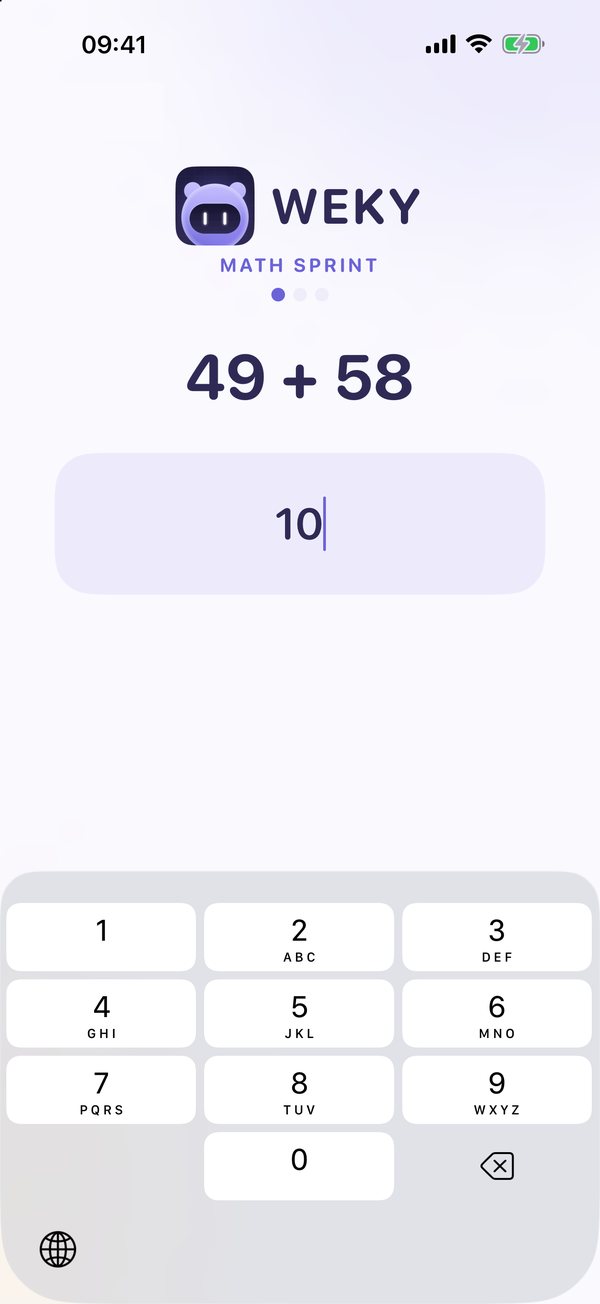
Setting five alarms teaches you to ignore them. One alarm that needs a task to stop — math, a barcode scan, a photo — works far better.

5. Remove the snooze button
Snooze is how 7:00 becomes 9:40. Turn it off, or use an alarm without one. More in how to stop hitting snooze.
6. Add a second check
A wake-up check that rings again a few minutes after you get up catches the "I'll just lie down for a second" relapse.
7. Cut alcohol, late caffeine and late screens
All three make sleep lighter and more broken, so you need longer to feel rested. A screen-free last hour helps — and blocking the apps you scroll at night makes it easy.

8. Avoid long naps
Keep naps to about 20 minutes, before mid-afternoon, so you're sleepy at night and up on time in the morning.
How Weky helps you stop oversleeping
We built Weky to make waking up on time reliable:
- Ten wake-up missions — the alarm stops only when you finish one.
- No snooze button.
- A wake-up check about ten minutes later.
- App blocking from bedtime, so late scrolling doesn't cost you the morning.
- Morning history shows which weekday you oversleep most.
And it rings every time. Weky schedules a real system alarm, so it rings on the lock screen in Silent mode, Sleep, Work or any Focus — even after a force-quit or a restart — without running in the background or draining your battery.
When to see a doctor
Talk to a doctor if you regularly sleep more than nine or ten hours and still feel exhausted, if you snore loudly or stop breathing at night, if you're very sleepy during the day, or if oversleeping comes with low mood. These can be signs of a sleep disorder, depression or another condition. If you sleep through every alarm, read why you sleep through your alarm.
This article is general information, not medical advice.
Frequently asked questions
What counts as oversleeping?
For most adults, regularly sleeping much more than nine hours, or sleeping far past the time you intended to get up. Needing 7–9 hours is normal; needing 10–12 regularly is worth looking into.
Is it normal to sleep for 12 hours?
Occasionally — after a short night, illness or travel. If you regularly need 12 hours and still feel tired, talk to a doctor.
Is it normal to need 9 hours of sleep?
Yes for some people. Adults need at least seven hours, and some genuinely need closer to nine. Teenagers need eight to ten.
Why am I sleeping so much lately?
Common reasons are catching up on sleep debt, stress, illness, alcohol, new medication, low mood or a late body clock. If it's persistent and you still feel exhausted, see a doctor.
How do I stop oversleeping on weekends?
Keep your wake time within about an hour of your weekday time, get light first thing, and go to bed a bit earlier on Friday and Saturday instead of sleeping in.
References
- Watson NF, Badr MS, Belenky G, et al. Recommended amount of sleep for a healthy adult. Sleep, 2015;38(6):843–844.
- Roenneberg T, Allebrandt KV, Merrow M, Vetter C. Social jetlag and obesity. Current Biology, 2012;22(10):939–943.
- Hilditch CJ, McHill AW. Sleep inertia: current insights. Nature and Science of Sleep, 2019;11:155–165.
- Centers for Disease Control and Prevention. About Sleep.