The best alarm clock to wake up depends on why you don't wake up. If you wake up groggy, a sunrise alarm clock with a gentle sound helps. If you don't hear alarms, choose the loudest alarm or a vibrating bed shaker. If you hear the alarm but switch it off and go back to sleep, which is the most common problem, you need an alarm that requires you to get out of bed or complete a task before it stops.
Most people don't need a louder alarm. They need one they can't silence on autopilot. In the first minutes after waking, sleep inertia makes your brain slow and foggy: good enough to reach over to turn off an alarm, not good enough to decide to get up. That's why the right alarm clock is less about the beep and more about what it takes to stop it. Below: how each type of alarm works, the best way to wake up for your sleep style, and how to set the alarm so you get up on time and start your day.
Key takeaways
- Sunrise alarm clocks wake you up gently with light and suit light to normal sleepers.
- Loud and vibrating alarms help if you don't hear a regular alarm clock.
- Alarms with a task (a mission, a clock that runs away) are the best alarm for heavy sleepers who turn alarms off half-asleep.
- Melodic alarm sounds are linked with less grogginess than harsh beeps.
- No snooze and a second check stop you from going back to sleep.
What is the best type of alarm clock to wake up?
| Type of alarm | How it wakes you | Best for | Weak point |
|---|---|---|---|
| Regular alarm clock | Beep or radio at a set time | Light sleepers with a steady sleep schedule | Easy to snooze or switch off |
| Sunrise alarm clock | Light that brightens before the alarm, then sound | Groggy mornings, dark winters | Often not enough alone for heavy sleepers |
| Loud alarm | Very loud sound, sometimes with bed shaker | People who don't hear alarms | Can wake others; still easy to stop |
| Vibrating alarm | Wrist or pillow vibration | Waking without disturbing a partner | Easy to sleep through for some |
| Alarm that moves | A clock that rolls away or must be caught | People who need to get out of bed | Noisy, needs space |
| Alarm app with missions | Rings until you finish a task | Heavy sleepers and chronic snoozers | Needs the phone to be set up properly |
Sunrise alarm clocks (wake up light and sunrise alarm)
A sunrise alarm clock, also called a wake-up light, gradually raises the brightness of the light over 20 to 40 minutes before your wake up time, simulating a natural sunrise. This sunrise simulation goes from a dim red to a warm light and then a bright white light as it gets closer to the time to wake. Light is the strongest signal for your circadian rhythm, so a light alarm helps you wake up gently instead of being jolted out of deep sleep. In a study on artificial dawn, people rated their sleep inertia lower after waking with dawn simulation than without it.
Most wake-up lights add a sound alarm at the end, often a chirping bird or soft tones, plus extras like an FM radio, Bluetooth speakers, a variety of sounds, a clock display that dims at night or a night light for a sunset routine. Well-known wake-up light alarm models include the Lumie Bodyclock range (such as the Bodyclock Shine 300), Philips wake-up lights, the Hatch Restore 3, which doubles as a sound machine, and budget options such as JALL Wake. Look for adjustable light intensity, an easy to set alarm and a clock face you can read without your glasses. Some people also use one as light therapy, and on dark winter mornings it makes for a pleasant wake-up experience. The limit: if you're a deep sleeper, the light alone may not rouse you, and you can still switch the alarm off and go back to sleep.
Loud alarm clocks for heavy sleepers
If you genuinely don't hear your alarm, the loudest alarm you can find, or a bed shaker that vibrates under your mattress or pillow, can help. An alarm clock for heavy sleepers usually combines a very loud alarm with a shaker. These were originally designed for people with hearing loss and for the deepest sleepers. They're very good at waking you, but they don't solve the other half of the problem: once you're awake enough to reach over and turn it off, nothing stops you from falling back asleep.
Vibrate alarms that only wake you up
Is there an alarm that only wakes you up and not the person next to you? Yes: a smartwatch, fitness band or a pillow vibrator wakes you with a vibrate pattern instead of sound. It's a good choice for couples on different schedules. For heavy sleepers, though, vibration alone is easy to sleep through.
Alarm clocks and alarm apps that make you get up
Some alarm clocks require you to complete something before they stop: a clock on wheels that rolls off the bedside table, a puzzle, or an alarm app that needs a mission before the alarm stops, like solving math problems, scanning a barcode in the kitchen, taking a photo of the sky or making your bed. For many people that's far more effective than the regular clock app on their phone. These are built for one thing: making it impossible to switch off the alarm without actually waking up. For heavy sleepers and chronic snoozers, this is the type that works.
Which alarm sound is best to wake up? Sleep sounds, tones and white noise
The alarm sound matters more than most people think. In an analysis of reported waking sounds, people who woke to melodic alarm tones reported less grogginess than those who woke to harsh beeps. A good approach:
- Start gentle, then rise. A tone that begins softly and gets louder wakes you without a jolt, but doesn't let you sleep through it.
- Pick something melodic you don't hate, so you don't dread it every morning.
- Change it every few weeks if you notice you've stopped reacting to it.
- Check silent mode. On a phone, make sure the alarm rings even in silent mode or Focus.
- Keep night sounds separate. A white noise machine or sleep sounds can improve sleep by masking noise, but use a different sound for your alarm so your brain treats it as the time to wake.
How to choose the best alarm clock and keep a sleep schedule
- "I wake up but feel awful." Try a sunrise alarm clock and a melodic tone, and keep a steady sleep schedule.
- "I don't hear alarms." Use a louder alarm or a bed shaker, and put the alarm somewhere it isn't muffled by pillows.
- "I hear it, switch it off and go back to sleep." You need an alarm that requires a task to stop, and no snooze button.
- "I don't want to wake my partner." Try a vibrating alarm, and keep your phone or clock on your side of the bed.
Whatever you choose, a few habits make every alarm work better: go to bed at a consistent time, put the alarm across the room so you have to get out of bed, and get bright light exposure as soon as you're up. Good sleep hygiene the night before, a calm sleep routine and a dark, quiet sleep environment make the morning much easier. The best way to wake is the one you can repeat every day: the first alarm, at the same time, with no snooze.
Weky: the alarm app that makes sure you actually wake up
Weky is an iPhone alarm app built for people who switch off every alarm half-asleep. It combines the strengths of the types above: gentle or loud sounds, and a task you have to complete before the alarm stops. It's easier to use than it sounds: set the time, pick a mission, and you have one that actually gets you up.
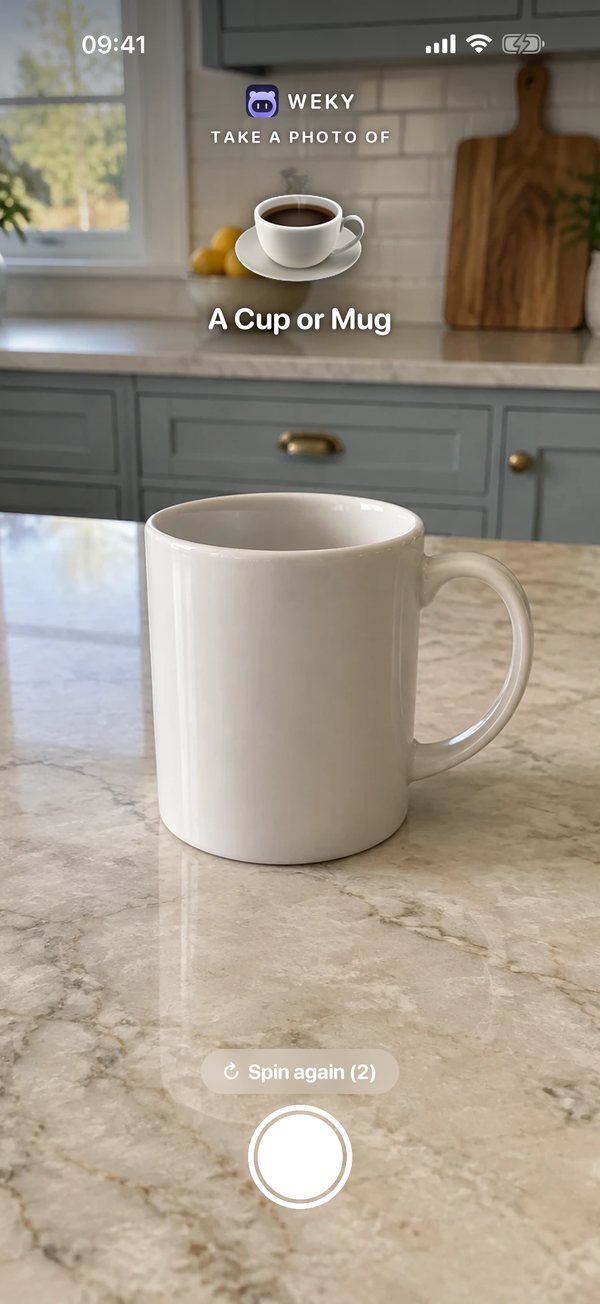
- Wake-up missions. Math problems, typing, push-ups, a photo hunt (an object, the sky or your made bed), a barcode scan, shaking the phone or an affirmation out loud. Stack up to five on one alarm.
- No snooze button. The alarm rings until the mission is done.
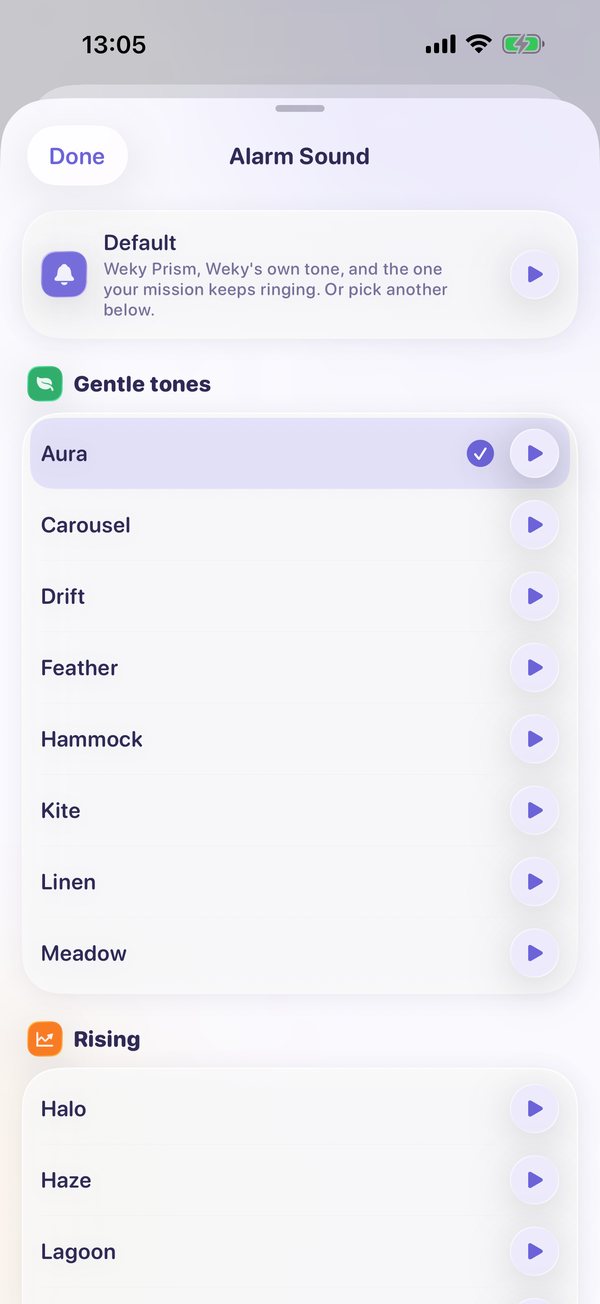
- Gentle or rising sounds. Choose from preset gentle tones for a gentle wake-up or tones that rise in volume, and the alarm keeps ringing during your mission.
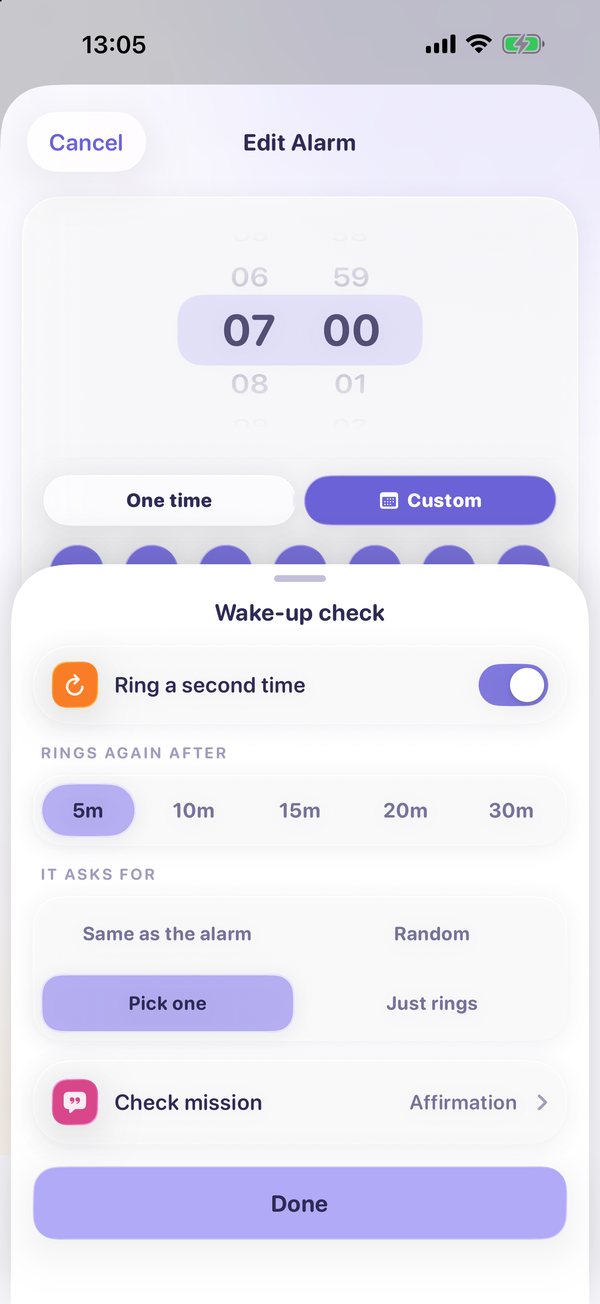
- The wake-up check. A second ring 5 to 30 minutes later, so you can't finish the mission and go back to sleep.
- Rings in silent mode and Focus, even if the app is closed, because Weky uses a real iOS system alarm.
- Bedtime and app blocking. The Sleep tab shows when to go to bed, and app blocking keeps late-night apps locked until your morning mission is done.
Weky is free to download; Weky Pro is available monthly, yearly (with a 7-day free trial) or lifetime.
If you often sleep through alarms, read why you sleep through your alarm, compare the best alarm apps for heavy sleepers, or learn how a no-snooze alarm app works.
Frequently asked questions
What is the best alarm clock to wake you up?
It depends on why you don't wake up. If loud alarms jolt you awake feeling terrible, a sunrise alarm clock with a gentle sound helps. If you don't hear alarms, a louder alarm or a vibrating bed shaker works. If you hear the alarm but switch it off and fall back asleep, choose an alarm that requires you to complete a task, like an alarm app with missions or a clock you have to get up to turn off.
What is the best alarm to wake me up if I'm a heavy sleeper?
Heavy sleepers usually need two things: an alarm loud or physical enough to wake them, and a way to stop it that requires being fully awake. Combine a loud tone or vibration with a mission like solving math problems or taking a photo in another room, plus no snooze.
Is there an alarm that only wakes you up and not your partner?
Yes. Vibrating alarms, like a smartwatch, a fitness band or a bed shaker under the pillow, wake you without sound. Sunrise lights are quieter too, though a bright light can still disturb a light-sleeping partner.
Do sunrise alarm clocks work?
For many people, yes. Wake-up lights brighten gradually before the alarm time, simulating dawn. In a study, artificial dawn reduced sleep inertia ratings after waking. They work best for light to normal sleepers and in dark winter mornings, and less well for heavy sleepers on their own.
What alarm sound is best to wake up?
Research on reported waking sounds suggests melodic alarms are linked with less grogginess than harsh beeps. For heavy sleepers, a sound that starts gently and rises in volume, or the loudest alarm tone you can tolerate, combined with a task to stop it, works best.
Should I use my phone or a separate alarm clock?
A phone is convenient and works with alarm apps that add missions, but it can tempt you to scroll in bed. If you use your phone, keep it across the room, block distracting apps at night and choose an alarm that rings even in silent mode.
References
- Giménez MC, Hessels M, van de Werken M, de Vries B, Beersma DG, Gordijn MC. Effects of artificial dawn on subjective ratings of sleep inertia and dim light melatonin onset. Chronobiology International, 2010;27(6):1219–1241.
- McFarlane SJ, Garcia JE, Verhagen DS, Dyer AG. Alarm tones, music and their elements: analysis of reported waking sounds to counteract sleep inertia. PLoS One, 2020;15(1):e0215788.
- Hilditch CJ, McHill AW. Sleep inertia: current insights. Nature and Science of Sleep, 2019;11:155–165.