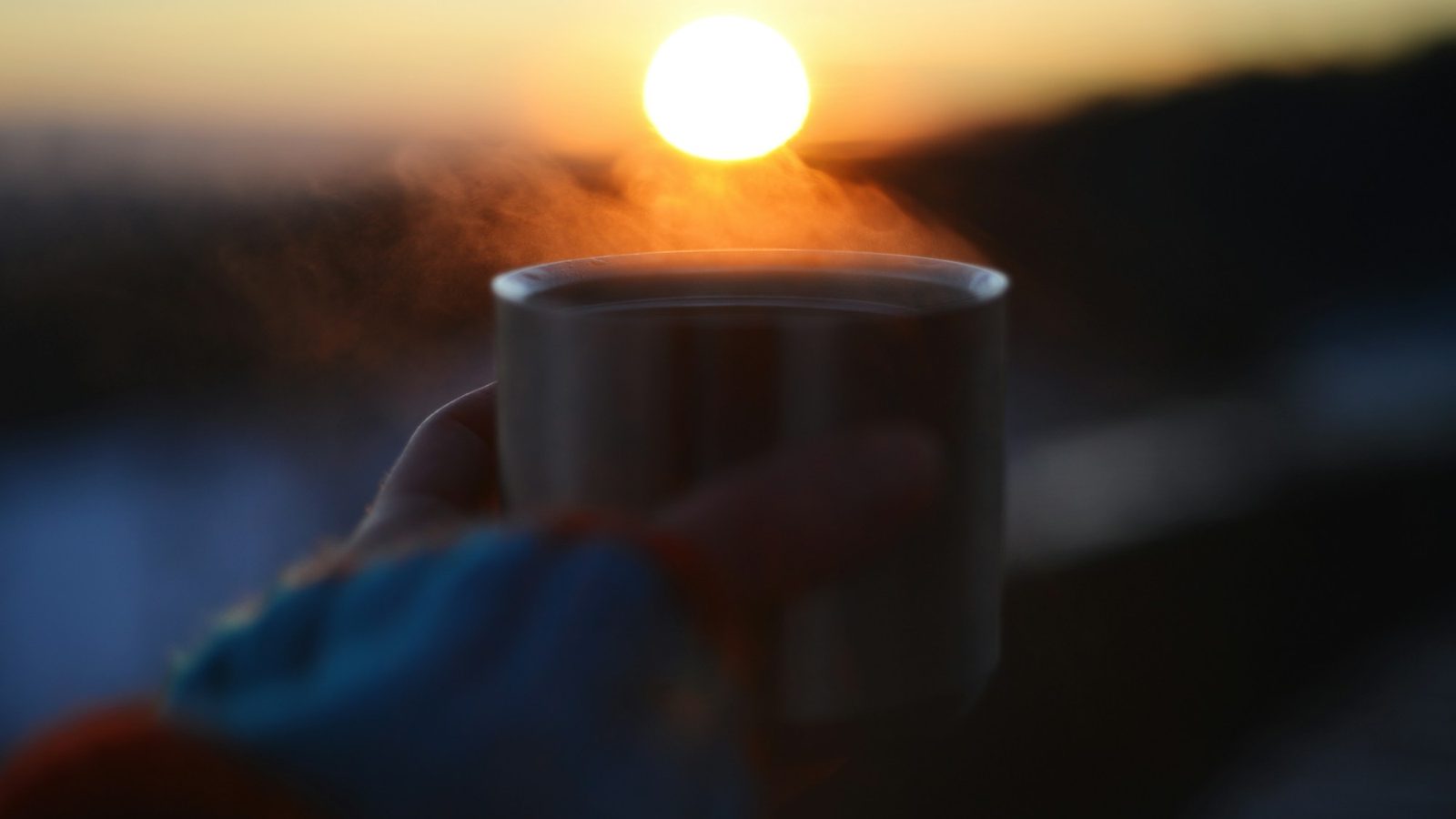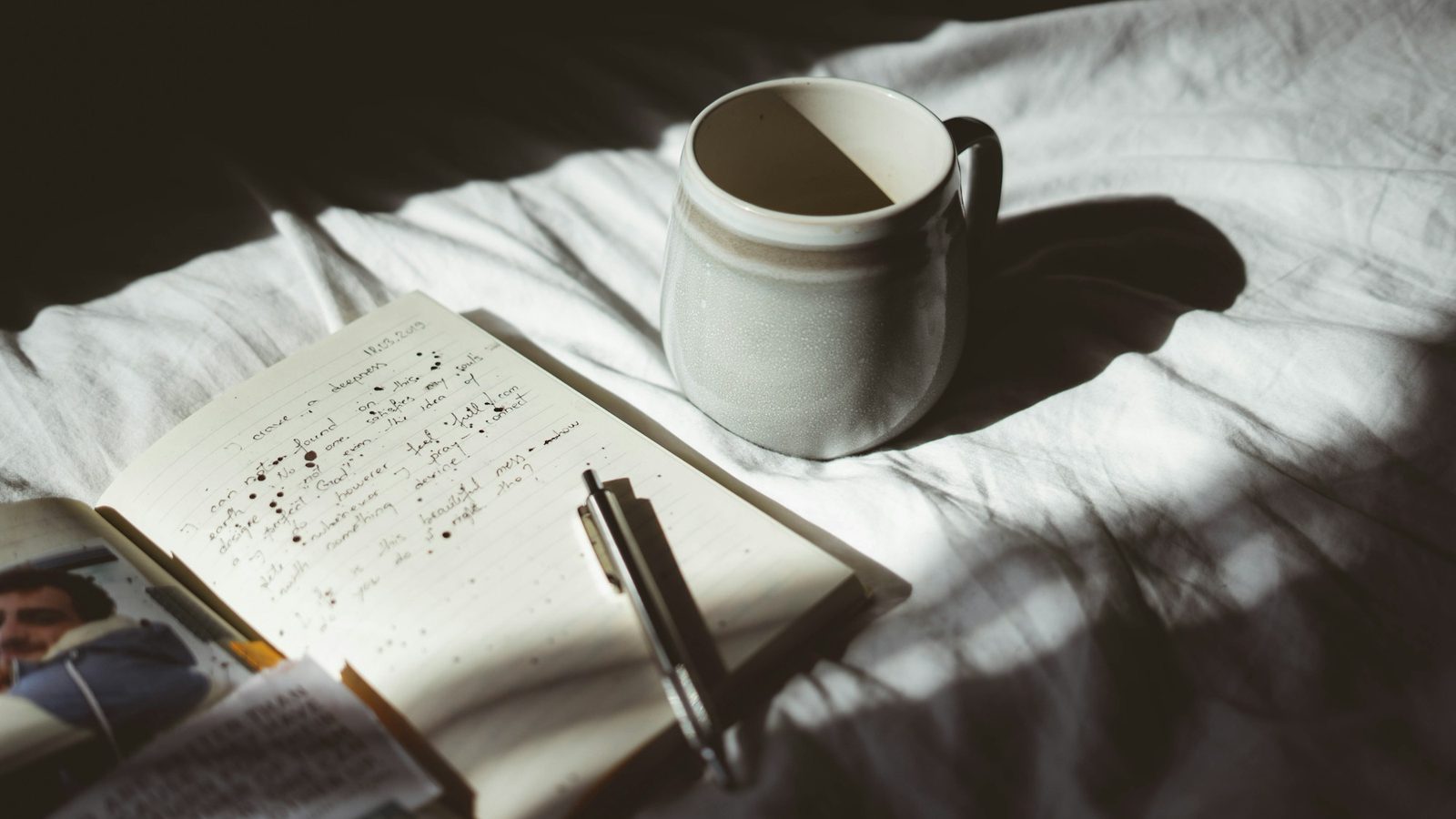
A good morning routine checklist is short and repeatable: wake up at the same time, get out of bed without snoozing, drink water, get daylight, move for a few minutes, make your bed, wash and dress, eat breakfast, and pick your one priority for the day — before you open email or social media. Ten to thirty minutes is enough. What matters is doing it every day, in the same order.
Most "perfect morning routine" lists are written by people with two free hours at 5 a.m. Real mornings are tighter. The checklist below is built for real life: the core steps take ten minutes, and each one earns its place with a clear reason.
Key takeaways
- The routine starts the night before and with a consistent wake time.
- Light, water and movement clear morning grogginess fastest.
- Phone last, not first. Your priorities before everyone else's.
- Short and daily beats long and occasional.
- Track it. Habits take weeks to become automatic.
The morning routine checklist
| # | Step | Why it helps |
|---|---|---|
| 1 | Wake up at the same time | Regular sleep timing anchors your body clock — and predicts health better than sleep length alone. |
| 2 | Get out of bed, no snooze | Snoozing is where routines die. |
| 3 | Drink a glass of water | An easy first win after a night without fluids. |
| 4 | Open the curtains or step outside | Daylight is the strongest signal that it's morning. |
| 5 | Move for 2–10 minutes | Stretching, a walk or push-ups shorten grogginess. |
| 6 | Make your bed | A finished task in the first five minutes — and no going back in. |
| 7 | Wash and get dressed | Signals "the day has started". |
| 8 | Eat breakfast | Regular meal times help keep your body clock steady. |
| 9 | Pick one priority | One thing that would make today a good day. |
| 10 | Five quiet minutes | Read, journal or breathe — your time. |
| 11 | Check your calendar | No surprises later. |
| 12 | Then the phone | Messages after your priorities, not before. |
Short versions for busy mornings
- 10 minutes: wake on time → water → curtains → make bed → dress → pick one priority.
- 30 minutes: add 10 minutes of movement, breakfast and five quiet minutes.
- 60 minutes: add a walk outside, reading or journaling, and a longer workout.

How to make a morning routine stick
- Prepare the night before. Clothes out, coffee ready, bag packed.
- Same order, every day. Order turns steps into a chain your brain can run on autopilot.
- Start smaller than you think. Three steps you do beat twelve you don't.
- Attach it to your alarm. The alarm is the trigger; the checklist is what follows.
- Track it and be patient. In one study, new daily habits took a median of 66 days to feel automatic, with a wide range between people.
Weky: the alarm with a morning routine built in
We built Weky so the routine starts the moment you wake:
- A wake-up mission gets you out of bed — make your bed and photograph it, take a photo of the sky, or do a few push-ups. No snooze.
- Start My Day opens right after the alarm with a short checklist: water, stretch, make your bed.
- Habit tracker: gym, reading, study or any habit you name gets its own alarm, colour and 90-day calendar. A day only counts when its mission is done.
- Streaks and badges make every on-time morning visible.
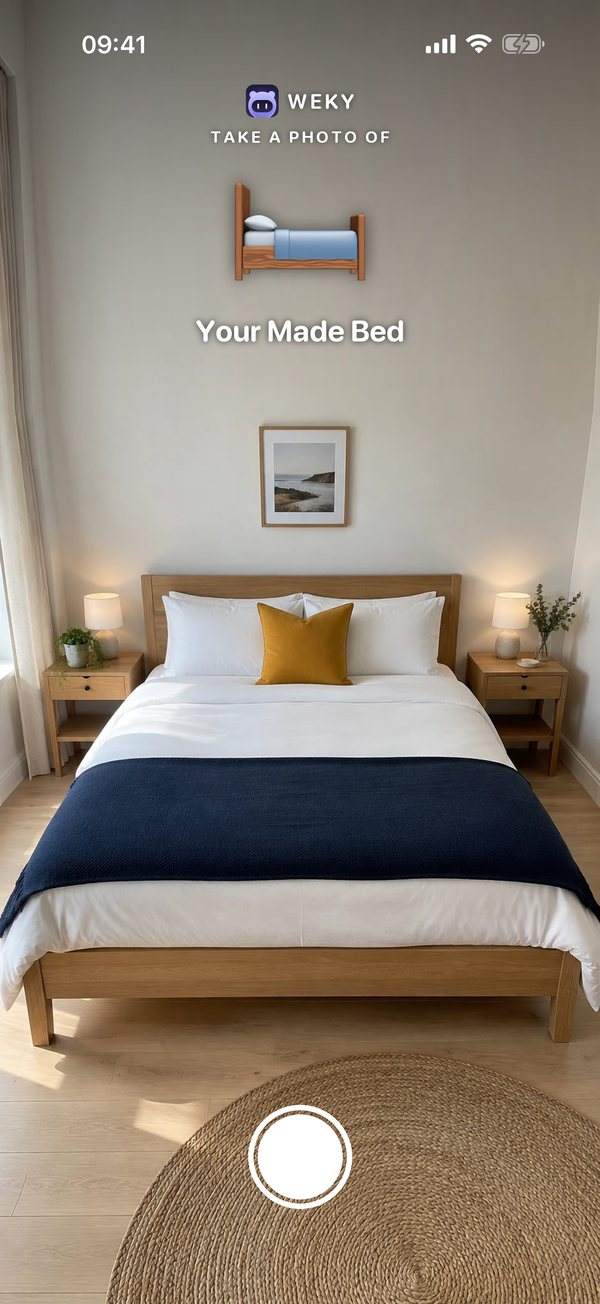
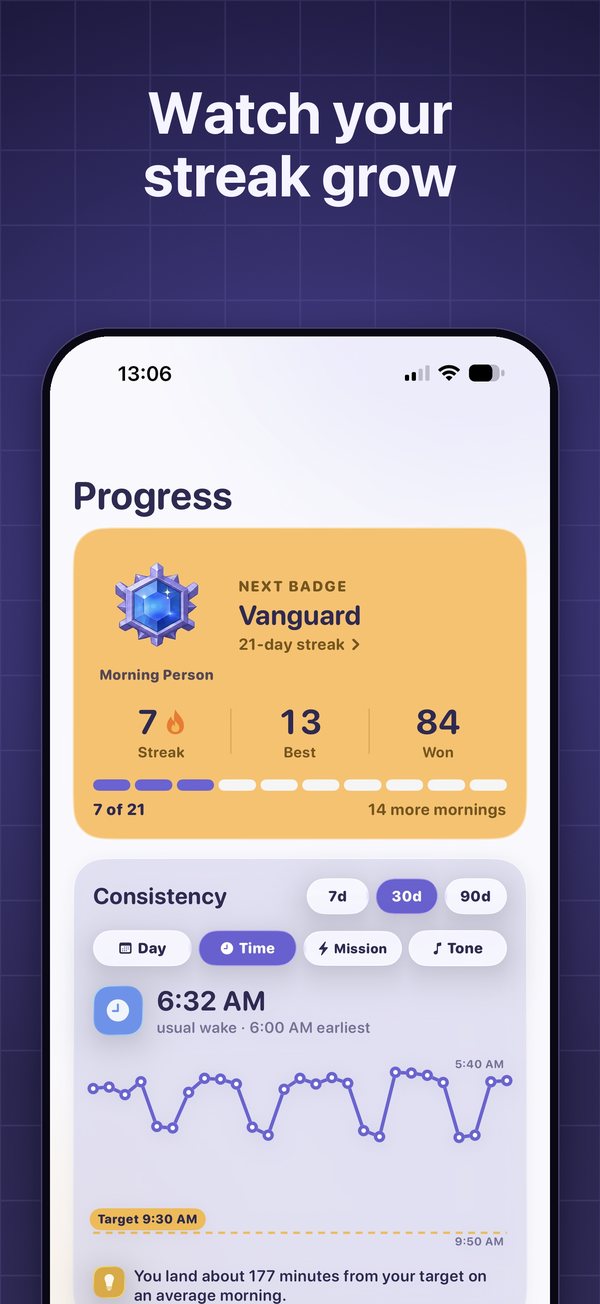
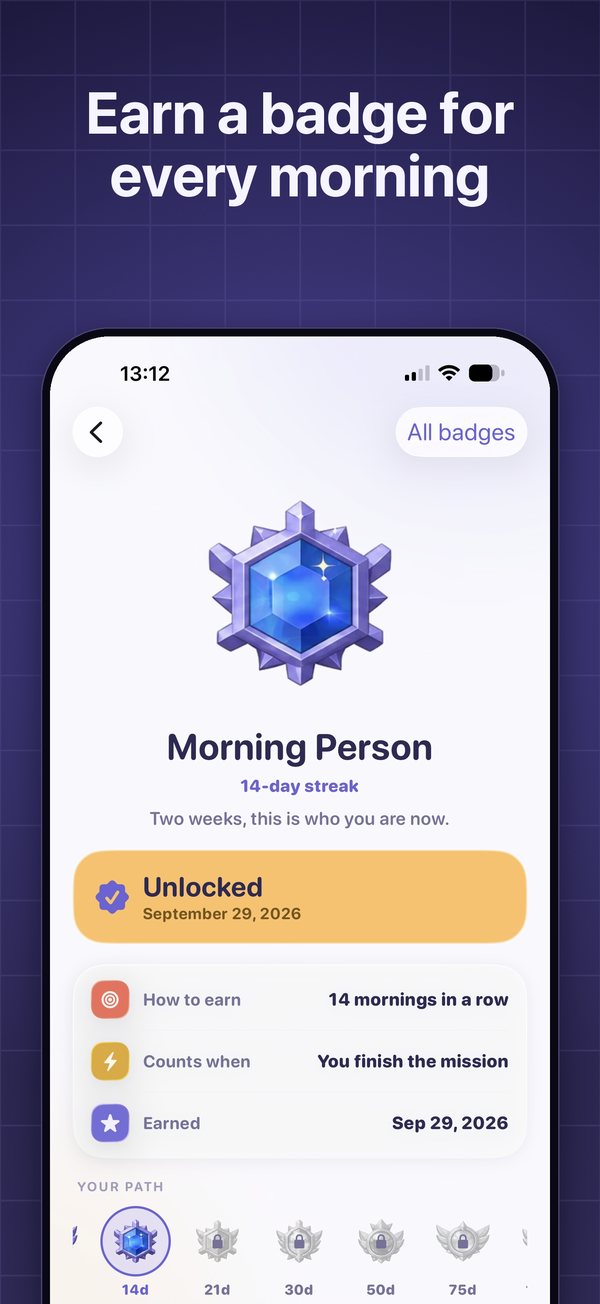
And it rings every time. Weky schedules a real system alarm, so it rings on the lock screen in Silent mode, Sleep, Work or any Focus — even after a force-quit or a restart — without running in the background or draining your battery.
If getting up is the hard part, start with how to get out of bed and how to wake up early.
Frequently asked questions
What should a morning routine include?
The essentials: a consistent wake time, water, daylight, some movement, a made bed, a healthy breakfast, and a minute to plan your one top priority. Keep the phone out of the first part of it.
How long should a morning routine be?
Ten to thirty minutes is plenty for most people. A short routine you do every day beats a long one you skip.
How do I make a morning routine stick?
Keep it short, do it in the same order every day, attach it to your alarm, and track it. Habits take time to become automatic — one study found a median of 66 days.
Should I check my phone in the morning?
Not first. Email and social feeds hand your morning to other people's priorities. Do your checklist first, then the phone.
References
- Lally P, van Jaarsveld CHM, Potts HWW, Wardle J. How are habits formed: modelling habit formation in the real world. European Journal of Social Psychology, 2010;40(6):998–1009.
- Wright KP, McHill AW, Birks BR, et al. Entrainment of the human circadian clock to the natural light-dark cycle. Current Biology, 2013;23(16):1554–1558.
- Windred DP, Burns AC, Lane JM, et al. Sleep regularity is a stronger predictor of mortality risk than sleep duration. Sleep, 2024;47(1):zsad253.
- Hilditch CJ, McHill AW. Sleep inertia: current insights. Nature and Science of Sleep, 2019;11:155–165.